

Introduction
In the modern era of sports, technology is playing a bigger role than ever before. From performance tracking devices to online registrations and digital scoreboards, the entire sports ecosystem is rapidly becoming smarter and more efficient. One of the most important innovations driving this transformation is the Sports ID system. Designed to create a unique digital identity for every athlete, Sports ID helps streamline registration, improve security, and ensure fair participation across competitions.
Gone are the days of manual paperwork, duplicate entries, and eligibility confusion. With a Sports ID, athletes, coaches, and sports organizations can manage profiles, track performance data, and verify credentials through a single, secure platform. Whether it’s a school tournament, local league, or professional championship, having a reliable identification system simplifies operations and enhances transparency.
As sports continue to grow globally, the need for organized, accurate, and digital management has become essential. This is where Sports ID systems stand out — offering smarter solutions that save time, reduce fraud, and create better opportunities for athletes at every level.
What is Sports ID?
A Sports ID is a unique digital identification system designed specifically for athletes, players, coaches, and sports participants. It works like a personal identity card within the sports ecosystem, allowing organizations to verify, manage, and track individuals efficiently. Instead of relying on manual paperwork and repeated registrations, a Sports ID provides a centralized digital profile that stores all essential information in one secure place.
In simple terms, a Sports ID acts as an athlete’s official sports identity. It may include personal details such as name, age, team affiliation, and contact information, along with competition records, medical history, performance statistics, and eligibility status. This makes it easier for schools, leagues, clubs, and federations to confirm that every participant is genuine and qualified to compete.
Modern Sports ID systems are often available through mobile apps, smart cards, or online dashboards. Some platforms even use advanced technologies like QR codes, biometric verification, or cloud databases to ensure maximum security and convenience. With just one scan or login, organizers can instantly access verified data without wasting time on paperwork.
As sports continue to digitize, the role of Sports ID is becoming increasingly important. It not only reduces fraud and duplication but also improves transparency, speeds up registration processes, and creates a more professional sports environment. Whether it’s a local tournament or an international championship, Sports ID ensures that every athlete is properly identified and recognized.
Why Sports ID is Important
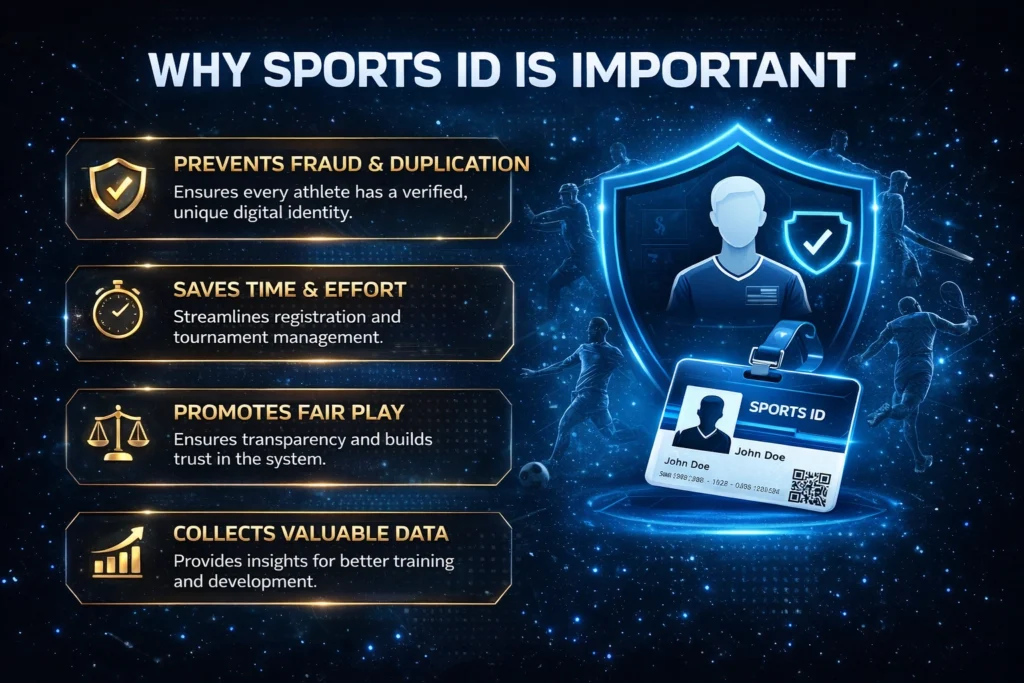
In today’s competitive sports environment, managing athletes manually is no longer practical. With thousands of players participating in tournaments, leagues, and championships, traditional registration methods often lead to errors, delays, and even fraud. This is exactly why a Sports ID system has become essential for modern sports management.
Without a proper identification system, organizations face several common problems such as duplicate registrations, fake identities, age fraud, misplaced documents, and long verification processes. These issues not only waste time but also affect fairness and credibility in competitions. A Sports ID eliminates these risks by providing every athlete with a verified and unique digital identity that cannot be duplicated or manipulated.
Another major reason Sports ID is important is efficiency. Event organizers no longer need to handle piles of paperwork or manually check eligibility. With a simple scan or login, they can instantly access an athlete’s details, participation history, and approval status. This speeds up registrations, check-ins, and tournament operations, saving both time and effort.
Sports IDs also promote transparency and trust. When every player is properly verified, competitions become fairer and more professional. Coaches, teams, and governing bodies can rely on accurate data for decision-making, while athletes feel confident that their records and achievements are safely stored.
Moreover, as sports technology continues to evolve, data has become extremely valuable. Sports ID systems allow organizations to collect performance statistics, analyze trends, and identify talent more effectively. This data-driven approach helps improve training, prevent injuries, and enhance overall performance.
Simply put, Sports ID is not just a convenience — it is a necessity. It brings structure, security, and professionalism to sports at every level, from school tournaments to international championships.
Key Features of Sports ID Systems
Modern sports management is no longer limited to manual forms, spreadsheets, or physical identity cards. Today’s Sports ID systems are powered by smart digital technology that simplifies athlete registration, improves verification, and enhances overall sports operations. These platforms come with a wide range of features designed to make life easier for athletes, coaches, and organizers alike.
One of the most important features is digital registration. Athletes can sign up online within minutes by filling out their details and uploading necessary documents. This removes the need for paperwork and long queues during tournaments. Everything is stored securely in a centralized database, making the process faster and more reliable.
Another essential feature is identity verification. Sports ID systems use tools like photo uploads, QR codes, OTP authentication, or even biometric scanning to confirm that each athlete is genuine. This helps prevent fake registrations, impersonation, and age fraud, ensuring fair competition across all levels.
Performance tracking is also a powerful benefit. Players’ match history, scores, rankings, and achievements are automatically recorded in their profile. Coaches and organizations can analyze this data to monitor progress, improve strategies, and identify talent. Over time, this creates a complete digital record of an athlete’s career.
Many Sports ID platforms also include medical and safety information. Emergency contacts, injury history, and health records can be stored within the ID. In case of accidents during games, this information helps medical staff respond quickly and effectively, improving athlete safety.
Additionally, real-time access through mobile apps makes Sports IDs even more convenient. Athletes can log in anytime to check their status, upcoming events, or performance reports. Organizers can instantly verify participants with just a scan, reducing delays during competitions.
Finally, most systems offer cloud-based storage and security. Data is encrypted, backed up, and protected against loss or misuse. This ensures that sensitive athlete information remains safe while still being easily accessible to authorized users.
Together, these features make Sports ID systems a complete solution for modern sports management. They not only save time and effort but also create a smarter, safer, and more professional sports environment.
Benefits of Sports ID for Athletes
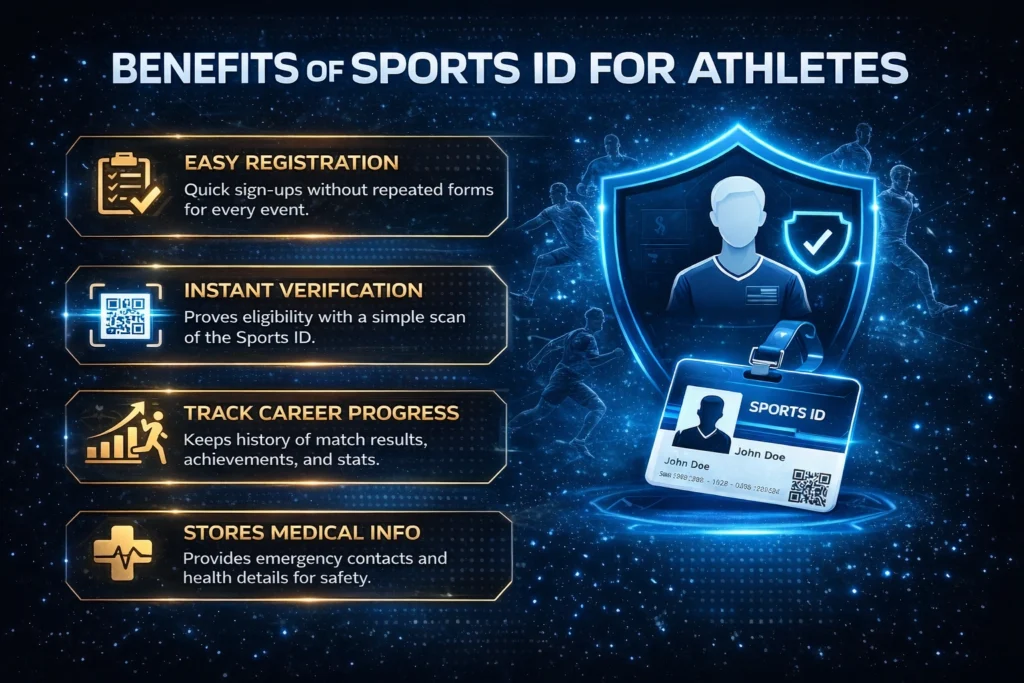
For athletes, managing registrations, documents, and competition records can often feel stressful and time-consuming. Repeated form submissions, lost paperwork, and long verification processes can distract players from what truly matters — their performance. This is where a Sports ID system makes a real difference by simplifying everything into one secure digital identity.
One of the biggest advantages of Sports ID for athletes is easy registration. Instead of filling out forms for every tournament or league, players only need to register once. Their details are safely stored in the system and can be reused whenever required. This saves time and removes unnecessary hassle before competitions.
Another key benefit is instant verification. With a unique Sports ID number or QR code, athletes can quickly prove their identity and eligibility. There’s no need to carry multiple documents or certificates. A simple scan confirms everything, allowing faster entry into events and smoother participation.
Sports ID also helps athletes track their career progress. Match results, scores, achievements, rankings, and performance data are automatically recorded in their profile. Over time, this creates a complete digital portfolio that showcases their journey and accomplishments. This record can be extremely useful when applying for scholarships, trials, or sponsorship opportunities.
Safety is another important advantage. Many Sports ID systems allow athletes to store medical details and emergency contacts. In case of injury or health issues during a game, officials or medical teams can quickly access critical information. This ensures faster response and better care.
Additionally, having a professional digital identity increases credibility and exposure. Coaches, scouts, and sports organizations can easily evaluate verified data, making it easier for talented athletes to get noticed. In today’s competitive sports world, visibility can open doors to bigger opportunities.
Overall, Sports ID empowers athletes with convenience, security, and control over their sports journey. Instead of worrying about administrative tasks, they can focus entirely on training, competing, and improving their performance.
Benefits of Sports ID for Coaches and Teams
Managing a team is not just about training and strategy — it also involves handling registrations, maintaining player records, verifying eligibility, and tracking performance. For coaches and team managers, these administrative tasks can quickly become overwhelming, especially when dealing with large squads or multiple tournaments. A Sports ID system simplifies these responsibilities by offering a centralized and organized digital solution.
One of the biggest advantages for coaches is easy player management. With Sports ID, all athlete information is stored in one secure platform. Coaches can instantly access profiles that include personal details, eligibility status, match history, and performance statistics. This eliminates the need for spreadsheets, paperwork, or scattered records.
Another important benefit is accurate team selection. Since performance data such as scores, fitness levels, and past results are tracked automatically, coaches can make informed decisions while choosing lineups. Instead of relying only on guesswork, they can analyze real data to select the best players for each match or tournament.
Sports ID also helps with faster tournament registration. Teams no longer need to submit documents for every player repeatedly. With verified digital IDs, the entire squad can be approved quickly, saving valuable time before competitions. This ensures smooth participation without last-minute delays.
In addition, injury and health monitoring becomes easier. Coaches can view medical records or injury history when needed, helping them plan training schedules safely. This reduces the risk of overtraining and protects players’ well-being.
Communication and coordination are also improved. Many Sports ID platforms provide notifications, schedules, and updates through mobile apps, allowing teams to stay informed about upcoming events, matches, or rule changes. This keeps everyone on the same page and enhances overall team efficiency.
Ultimately, Sports ID allows coaches to spend less time on paperwork and more time focusing on what truly matters — training athletes, building strategies, and achieving better results. It transforms team management into a smarter, faster, and more professional process.
Benefits of Sports ID for Sports Organizations and Leagues
For sports organizations, leagues, academies, and governing bodies, managing hundreds or even thousands of athletes can be a complex and time-consuming task. From verifying registrations to organizing tournaments and maintaining records, administrative challenges often slow down operations. A Sports ID system provides a structured and automated solution that simplifies management at every level.
One of the most valuable benefits is streamlined registration and approval. Instead of manually checking forms and documents, organizers can instantly verify athletes through their unique Sports ID profiles. This speeds up enrollment processes and reduces errors caused by paperwork or incomplete information. Events can be organized faster and more efficiently.
Sports ID systems also help in preventing fraud and duplication. Issues like fake identities, multiple registrations, or age manipulation are common challenges in sports competitions. With digital verification tools such as QR codes, photo authentication, and centralized databases, organizations can ensure that every participant is genuine and eligible. This maintains fairness and credibility in tournaments.
Another major advantage is centralized data management. All athlete, team, and event information is stored in one secure platform. Organizers can access records, statistics, and reports anytime without searching through files or spreadsheets. This makes administration smoother and more professional.
For leagues and federations, performance analytics and reporting are extremely valuable. Sports ID platforms collect real-time data on matches, rankings, participation levels, and results. This information helps decision-makers evaluate performance trends, plan future events, and identify emerging talent. Data-driven insights allow organizations to grow strategically.
Financial management also becomes easier. Registration fees, memberships, and event payments can be tracked digitally, reducing accounting errors and improving transparency. Automated systems save both time and operational costs.
Most importantly, Sports ID enhances the overall reputation and professionalism of an organization. When processes are fast, secure, and transparent, athletes and teams gain more trust in the system. This leads to better participation, smoother events, and stronger growth for the sports ecosystem.
In short, Sports ID transforms sports organizations from manual operations into modern, technology-driven platforms capable of handling large-scale competitions with ease.
How a Sports ID System Works
Understanding how a Sports ID system works is simple when broken down into steps. Although the technology behind it may involve cloud computing, databases, and digital verification tools, the process for athletes and organizers is quick and user-friendly. The goal is to make registration, identification, and management as smooth as possible.
The first step begins with online registration. Athletes or participants sign up through a website or mobile app by entering basic details such as name, age, contact information, and team affiliation. They may also upload important documents like ID proof, photographs, or eligibility certificates. This replaces traditional paperwork and allows everything to be submitted digitally within minutes.
Once the information is submitted, the system performs verification and approval. Organizers or automated tools check the documents to confirm authenticity. Some advanced platforms use QR codes, OTP verification, or biometric checks like face recognition or fingerprints to ensure that each person is genuine. This step prevents duplicate or fake registrations.
After successful verification, the athlete receives a unique Sports ID number or digital profile. This ID acts as their permanent sports identity. It can be accessed through a mobile app, digital card, or printable badge. From this point onward, the athlete no longer needs to re-register for every event — their ID handles everything.
During tournaments or competitions, officials can scan the Sports ID using a QR code or system login. Within seconds, they can view the athlete’s details, eligibility status, and participation history. This makes check-ins faster and eliminates long waiting lines.
As the athlete competes, the system continuously updates performance data. Match results, scores, rankings, and achievements are automatically recorded in their profile. Over time, this creates a complete digital record that helps coaches, teams, and organizations analyze progress.
Finally, all data is stored securely in the cloud-based database, ensuring that information is safe, backed up, and accessible anytime. Authorized users can retrieve records whenever needed without worrying about data loss.
In short, a Sports ID system works like a smart digital passport for athletes — register once, verify once, and use it everywhere. This simple process saves time, improves security, and makes sports management far more efficient.
Types of Sports ID Systems
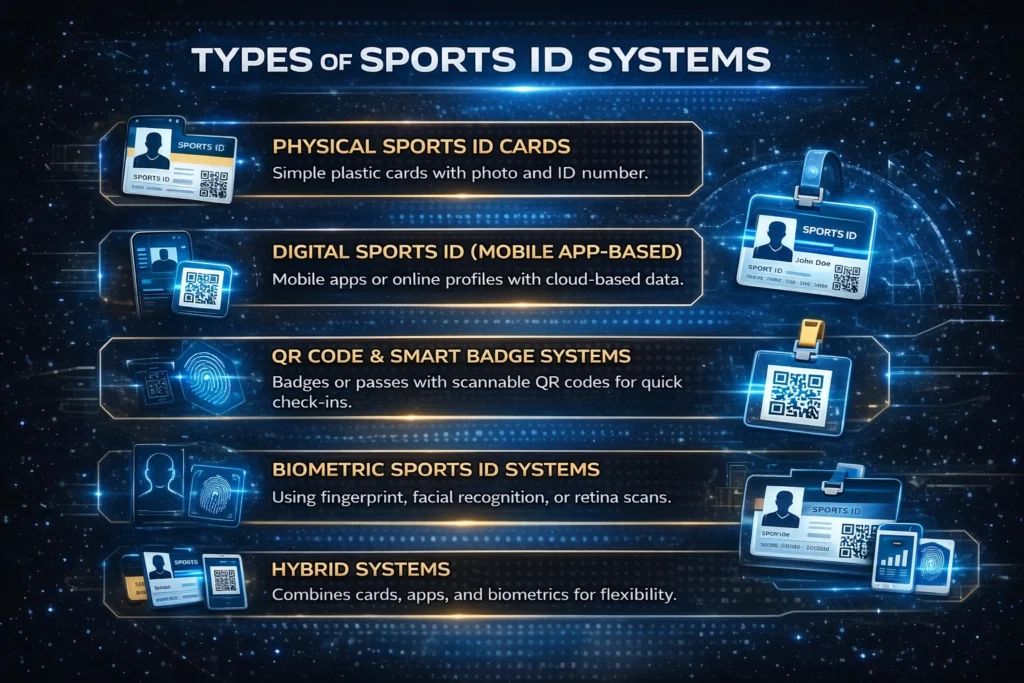
Not all Sports ID systems are built the same. Depending on the size of the organization, level of competition, and technical requirements, Sports IDs can come in different formats. From simple physical cards to advanced biometric solutions, each type offers unique advantages. Choosing the right system depends on how secure, scalable, and convenient the platform needs to be.
1. Physical Sports ID Cards
Physical ID cards are the most basic form of Sports ID. These cards usually include the athlete’s photo, name, unique ID number, and sometimes a barcode or QR code for scanning. Many schools, colleges, and local clubs still use this method because it is simple and affordable.
The main benefit of physical cards is ease of use. Athletes can carry them anywhere, and organizers can quickly scan them during events. However, they can be lost, damaged, or duplicated, which limits their security compared to digital options.
2. Digital Sports ID (Mobile App-Based)
Digital Sports IDs are becoming the most popular choice today. These systems provide athletes with a mobile app or online profile where all their information is stored. Instead of carrying a card, players can simply log in or show their QR code from their smartphone.
This method is fast, paperless, and convenient. Updates happen in real time, meaning changes to records or performance stats appear instantly. Digital IDs are also more secure since data is stored in the cloud and protected with passwords or authentication tools.
3. QR Code and Smart Badge Systems
Some organizations use QR code badges or smart passes that can be scanned at entry points. These are commonly used in large tournaments or professional leagues where quick check-ins are required.
With one scan, officials can verify identity, attendance, and eligibility. This system reduces waiting time and improves event management efficiency. It’s ideal for competitions with hundreds or thousands of participants.
4. Biometric Sports ID Systems
For maximum security, advanced Sports ID platforms use biometric technology such as fingerprint scanning, facial recognition, or retina scans. These systems ensure that no one can impersonate another athlete.
Biometric IDs are highly reliable and eliminate fraud completely, making them perfect for national-level or international competitions. However, they can be more expensive to set up and require specialized equipment.
5. Hybrid Systems
Many modern organizations prefer a hybrid approach that combines physical cards, digital apps, and biometric tools. This offers the best of all worlds — convenience, speed, and high security. Hybrid systems are flexible and can adapt to both small events and large-scale tournaments.
Overall, the choice of Sports ID system depends on the organization’s goals and budget. While small clubs may prefer simple cards, larger leagues often adopt digital or biometric solutions for better performance and security. Regardless of the format, the objective remains the same — accurate identification and efficient sports management.
Sports ID Use Cases in Real-World Scenarios
The true value of a Sports ID system becomes clear when we look at how it is used in real-life situations. From school playgrounds to professional stadiums, digital identification is transforming the way sports are organized and managed. Different institutions use Sports IDs in different ways, but the goal remains the same — faster registration, better security, and smarter management.
Schools and Colleges
Educational institutions often manage hundreds of students participating in multiple sports throughout the year. Handling registrations manually can be confusing and time-consuming. With Sports ID, schools can create digital profiles for each student, making it easier to track participation, attendance, and performance.
Teachers and coaches can instantly verify students during events, maintain records of achievements, and manage inter-school tournaments efficiently. It also ensures that only eligible students participate, reducing administrative mistakes.
Sports Academies and Training Centers
Sports academies focus heavily on athlete development. They need detailed records of training sessions, performance metrics, and injury history. Sports ID systems allow academies to store and analyze this information in one place.
Coaches can monitor progress over time, create personalized training plans, and identify areas that need improvement. This data-driven approach helps athletes grow faster and more professionally.
Local Leagues and Amateur Tournaments
Community leagues and amateur tournaments often struggle with duplicate registrations or identity issues. Sports ID provides a simple solution by assigning each participant a unique digital identity.
Organizers can quickly verify players, manage team lists, and schedule matches without paperwork. Check-ins become faster with QR codes or digital badges, making events more organized and enjoyable for everyone.
Professional Teams and Clubs
At the professional level, accuracy and efficiency are critical. Teams handle contracts, player statistics, medical records, and performance analytics daily. Sports ID systems help centralize all this information into one secure platform.
Managers can access real-time data, track player fitness, and make informed decisions. This improves team strategy and overall performance while maintaining professional standards.
National Federations and Large Events
Large-scale competitions, such as national championships or international tournaments, require strict verification and high security. Sports ID systems ensure that only approved athletes participate.
With thousands of participants, digital IDs speed up accreditation, entry management, and record-keeping. This reduces chaos and allows events to run smoothly without delays.
Overall, Sports ID systems are flexible enough to work for small schools as well as massive sports organizations. Their adaptability makes them a universal solution for modern sports management. No matter the scale, they help save time, reduce errors, and create a more professional experience.
Challenges of Implementing Sports ID Systems
While Sports ID systems offer numerous benefits, implementing them is not always without challenges. Like any new technology, adoption requires planning, investment, and proper training. Organizations must be prepared to handle a few obstacles before fully enjoying the advantages of digital sports identification.
One of the most common challenges is initial setup cost. Advanced Sports ID platforms may require software subscriptions, hardware devices, scanners, or biometric equipment. For small clubs or schools with limited budgets, this upfront investment can feel expensive. However, over time, the savings from reduced paperwork and manual labor usually outweigh these costs.
Another issue is resistance to change. Many coaches, administrators, or staff members are used to traditional methods like paper forms and manual registers. Switching to a digital system may feel complicated at first. Without proper training and support, users might hesitate to adopt the new technology. Providing simple tutorials and guidance can help overcome this barrier.
Technical challenges can also arise, especially in rural or remote areas. Poor internet connectivity or lack of devices may make it difficult to access cloud-based systems. In such cases, offline or hybrid solutions can help ensure smooth operations without relying entirely on the internet.
Data privacy and security are additional concerns. Since Sports ID systems store personal and medical information, organizations must ensure that the data is protected. Weak security measures could lead to breaches or misuse. That’s why strong encryption, secure servers, and strict access controls are essential for maintaining trust.
There may also be data migration difficulties when moving from old records to new digital platforms. Transferring years of paperwork into a system takes time and careful management. However, once completed, the long-term benefits of centralized digital storage make the effort worthwhile.
Despite these challenges, most organizations find that the advantages of Sports ID systems far outweigh the drawbacks. With proper planning, training, and the right technology partner, implementation becomes smooth and highly rewarding.
Future of Sports ID Technology
As technology continues to evolve, the future of Sports ID systems looks smarter, faster, and more advanced than ever before. What started as a simple identification tool is quickly transforming into a complete digital ecosystem that connects athletes, coaches, and organizations in real time. In the coming years, Sports ID technology is expected to play an even bigger role in shaping how sports are managed worldwide.
One of the most exciting developments is the integration of artificial intelligence (AI). AI-powered systems will analyze athlete data, predict performance trends, and even detect injury risks before they happen. Coaches will be able to make smarter decisions using real-time insights rather than guesswork. This will improve both safety and performance.
Another major trend is the use of wearable technology. Smartwatches, fitness bands, and tracking devices can sync directly with Sports ID platforms to collect live data such as heart rate, speed, stamina, and movement patterns. This information will automatically update an athlete’s digital profile, creating a more accurate and detailed performance record.
Biometric verification is also expected to become more common. Facial recognition, fingerprint scanning, and other biometric tools will make identity checks faster and more secure. Athletes may soon enter stadiums or competitions simply by scanning their face or fingerprint, eliminating the need for physical cards entirely.
Some platforms are exploring blockchain technology to store records securely. Blockchain can create tamper-proof data, ensuring that athlete achievements, certifications, and results cannot be altered or manipulated. This adds an extra layer of trust and transparency, especially for high-level competitions.
In the future, we may also see smart stadiums and fully automated events. Sports IDs could enable contactless entry, automatic attendance tracking, and instant eligibility checks. Everything from registration to match results could be managed digitally without manual intervention.
Ultimately, the future of Sports ID is about creating a connected and intelligent sports environment. With better technology, athletes will enjoy smoother participation, organizations will operate more efficiently, and the entire sports ecosystem will become more professional and data-driven.
Sports ID is not just a trend — it is the foundation of the next generation of sports management.
Frequently Asked Questions (FAQs) About Sports ID
1. What is a Sports ID?
A Sports ID is a unique digital identification system created for athletes, coaches, and sports participants. It stores personal details, registration records, performance data, and eligibility information in one secure profile, making sports management easier and more organized.
2. Why do athletes need a Sports ID?
Athletes need a Sports ID to simplify registrations, verify their identity quickly, and track their performance history. It removes paperwork, saves time during tournaments, and provides a professional digital record of their achievements.
3. How does a Sports ID system work?
The process is simple. Athletes register online, upload documents, and receive a unique ID number or digital profile. Organizers can scan or check this ID to verify eligibility, manage participation, and update performance records automatically.
4. Is Sports ID safe and secure?
Yes, modern Sports ID systems use encrypted databases, secure cloud storage, and verification tools like QR codes or biometrics. This ensures that personal and medical information remains protected from unauthorized access.
5. Who can use Sports ID systems?
Sports ID systems can be used by schools, colleges, sports academies, local leagues, professional teams, and national federations. Anyone managing athletes or sports events can benefit from this technology.
6. Can Sports ID help prevent fraud or fake registrations?
Absolutely. Since every athlete receives a unique verified identity, issues like duplicate registrations, impersonation, or age fraud are significantly reduced. This ensures fair and transparent competitions.
7. Do athletes need to carry physical ID cards?
Not necessarily. Many Sports ID platforms offer digital IDs through mobile apps or QR codes. However, some organizations may still use physical cards or hybrid systems depending on their needs.
8. What information is stored in a Sports ID profile?
A Sports ID profile may include personal details, team affiliation, competition history, performance statistics, medical records, and eligibility status — all stored securely in one place.
9. Is Sports ID suitable for small clubs or only large organizations?
Sports ID systems are flexible and scalable. They work equally well for small local clubs and large international tournaments. Organizations can choose features based on their size and budget.
10. What is the future of Sports ID technology?
The future includes AI analytics, wearable device integration, biometric verification, blockchain security, and smart stadiums. These innovations will make sports identification faster, safer, and more efficient.
Conclusion
In today’s fast-moving sports world, digital transformation is no longer optional — it’s essential. A Sports ID system has emerged as one of the most powerful tools for simplifying athlete registration, improving identity verification, and bringing transparency to sports management. From schools and academies to professional teams and national tournaments, Sports ID technology is helping organizations replace outdated paperwork with smart, secure, and efficient digital solutions.
By using Sports IDs, athletes can register faster, track their achievements, and build a verified sports profile that supports their long-term career growth. Coaches benefit from better team management and performance insights, while organizations gain complete control over registrations, data, and event operations. The result is a smoother, safer, and more professional sports ecosystem for everyone involved.
As the industry continues to evolve with AI, biometrics, and wearable devices, Sports ID systems will only become more advanced and essential. Organizations that adopt this technology today are preparing themselves for the future of modern sports management.
If you’re looking for a reliable and secure platform to get started, you can explore the official Sports ID registration system at
👉 mahadeviplid
You can also check out related platforms and partner resources such as:
These platforms support the growing digital sports and online ecosystem, helping users access smarter and more convenient services.
In the end, Sports ID is more than just an identification tool — it’s the foundation for organized, fair, and technology-driven sports. Adopting it today means stepping confidently into the future of sports.