

Mahadev T20 ID Experience: High-Energy Interaction in Every Over
The digital cricket environment thrives on speed, and the Mahadev T20 ID ecosystem reflects exactly that intensity. Every over in a T20 match can redefine momentum, and the Mahadev T20 ID space mirrors this high-tempo rhythm through continuous updates and rapid interaction layers. The idea behind Mahadev T20 ID is not simply to follow the scoreboard but to stay mentally connected with each delivery as it unfolds.
When a match begins, the Mahadev T20 ID interface becomes active with ball-to-ball awareness. Instead of waiting for commentators to explain the situation, users observing through Mahadev T20 ID already understand pressure build-ups, field adjustments, and strike rotation impact. This high engagement keeps the mind aligned with the pace of the game.
Powerplay Phase with Mahadev T20 ID
During the powerplay overs, the scoring rate rises sharply. Through Mahadev T20 ID, users closely track aggressive intent, boundary patterns, and early momentum signals. The platform environment makes the opening overs feel like a strategic puzzle rather than just entertainment.
In the first six overs:
- Batters test field restrictions
- Bowlers search for swing advantage
- Momentum shifts quickly
Mahadev T20 ID enhances this phase because every delivery holds predictive value. Fans using Mahadev T20 ID observe not only runs but patterns — length preference, off-side targeting, and risk percentage. The opening overs therefore become analytical rather than random.
Middle Overs Awareness Through Mahadev T20 ID
Many casual viewers think middle overs are slow, but experienced followers know they decide the final result. The Mahadev T20 ID structure highlights this phase strongly. Here, strike rotation, dot-ball pressure, and bowling economy define the upcoming death overs.
Using Mahadev T20 ID, users start identifying:
- Building pressure sequences
- Batter patience strategy
- Spin vs pace effectiveness
Because Mahadev T20 ID continuously reflects changing match balance, viewers notice how a quiet over can be more powerful than a boundary over. The system encourages deeper cricket understanding rather than surface excitement.
Death Overs Intensity with Mahadev T20 ID
The final overs represent peak adrenaline. Every ball may change the result, and Mahadev T20 ID reaches maximum activity during this stage. Real-time awareness becomes crucial because decisions occur within seconds.
At this point:
- Required run rate spikes
- Field placements tighten
- Risk percentage increases
Mahadev T20 ID users experience heightened anticipation before each delivery. The environment emphasizes pressure calculations, helping fans sense whether the chasing side holds advantage or the bowling side controls momentum. The last overs become a psychological contest, and Mahadev T20 ID acts as the observation lens.
Continuous Engagement Beyond Watching
Traditional viewing ends when attention drifts. Mahadev T20 ID prevents that by keeping the mind active between deliveries. Instead of idle waiting, users analyze scenarios constantly.
Key engagement factors inside Mahadev T20 ID include:
- Momentum interpretation
- Pattern recognition
- Outcome anticipation
Because of this layered involvement, the match feels shorter yet more intense. Time passes quickly since attention never disconnects from the game.
Understanding Match Flow Through Mahadev T20 ID
Every cricket match has a flow — early dominance, resistance, turning point, and climax. Mahadev T20 ID allows users to follow this flow numerically and emotionally together.
For example, a sudden wicket after two boundaries shifts perception immediately. Through Mahadev T20 ID, that shift becomes visible not just emotionally but logically. Fans recognize why pressure transfers from one side to the other.
The platform therefore trains viewers to think like strategists rather than spectators.
High Density Interaction Environment
The defining characteristic of Mahadev T20 ID is density — not physical density but informational density. Multiple micro-events occur in seconds:
- Field change
- Bowling variation
- Batter intent adjustment
Mahadev T20 ID captures these details rapidly. Because the T20 format moves fast, missing a moment changes understanding. High-density updates ensure continuity of awareness.
Engagement Psychology
Human attention responds strongly to immediate feedback. Mahadev T20 ID leverages this principle. Each ball produces an instant cognitive response:
Prediction → Outcome → Reaction → Next Prediction
This loop repeats throughout the match. The shorter the loop, the stronger the engagement. T20 cricket already shortens intervals; Mahadev T20 ID intensifies them further.
As a result, users remain mentally invested from first ball to last ball.
Mahadev T20 ID as a Cricket Companion
Rather than replacing broadcast viewing, Mahadev T20 ID works as a companion layer. The television shows action, while Mahadev T20 ID explains impact.
Together they create a complete experience:
- Visual understanding from the screen
- Logical understanding from Mahadev T20 ID
This dual awareness transforms cricket into an interactive narrative.
The Fast-Paced Digital Cricket Mindset
Regular viewers watch matches. Mahadev T20 ID users anticipate them. Over time, the brain adapts to spotting patterns faster:
- Recognizing pressure overs
- Predicting bowling changes
- Sensing turning points
This mindset shift is the core of the Mahadev T20 ID environment. The platform is less about result and more about real-time understanding.
In the modern era of rapid entertainment, the cricket experience evolves continuously. The Mahadev T20 ID concept represents this change — a high-density, high-tempo interaction model aligned perfectly with the speed of T20 cricket. Instead of waiting for highlights, the user lives inside every moment of the match, ball after ball, over after over.
Mahadev T20 ID Platform Flow: From Login to Live Match Synchronization
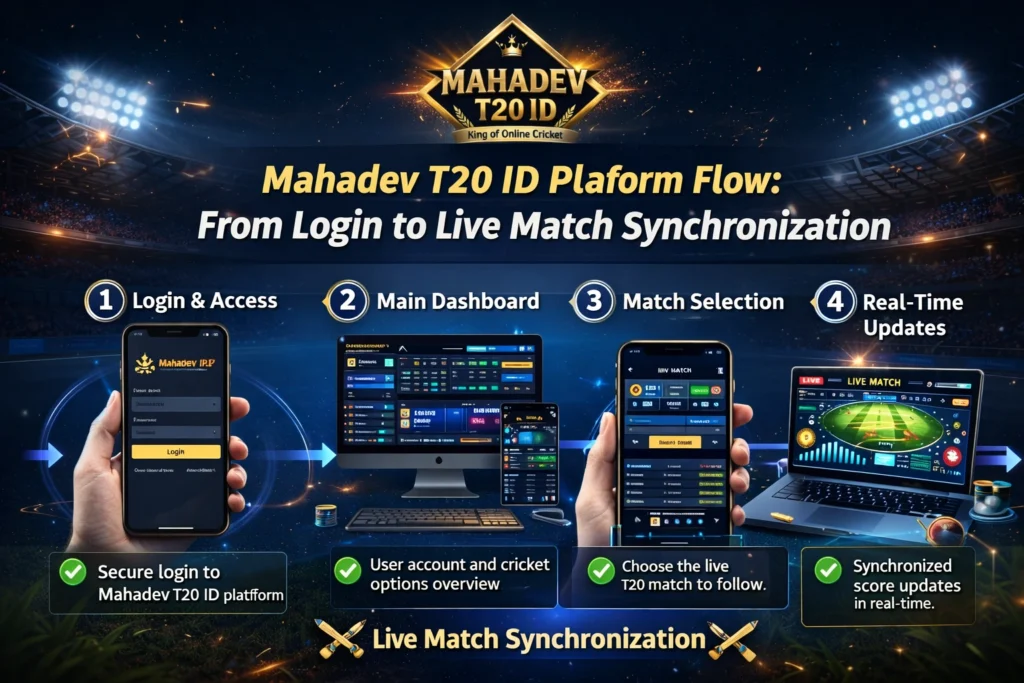
The journey inside the Mahadev T20 ID environment begins long before the first ball is bowled. The entire structure of Mahadev T20 ID is designed around continuity — once the match starts, the user should never feel disconnected from the action. Every stage inside Mahadev T20 ID leads naturally to the next, creating a smooth flow from access to live synchronization.
The purpose of Mahadev T20 ID is simple: remove delay between match event and user awareness. When timing matters, even seconds feel important. Therefore the Mahadev T20 ID environment prioritizes instant responsiveness.
Entry and Access Within Mahadev T20 ID
When a user enters the Mahadev T20 ID space, the system immediately aligns with ongoing cricket schedules. Instead of browsing randomly, Mahadev T20 ID places active matches at the center. This reduces effort and increases focus.
Inside Mahadev T20 ID access stage:
- Upcoming matches appear first
- Live matches remain highlighted
- Completed matches move to history
This organization ensures the user spends time on engagement rather than searching. The Mahadev T20 ID concept revolves around minimizing distractions so the mind remains match-oriented.
Match Selection Behavior in Mahadev T20 ID
Once inside, the user chooses a match. This selection triggers synchronization. The Mahadev T20 ID system begins aligning timing, overs, and events with real-world match progression.
The moment synchronization occurs:
- Score updates become instant
- Overs advance without refresh delay
- Momentum indicators activate
This is where Mahadev T20 ID shifts from platform to experience. The user is no longer browsing a website; they are tracking a live sporting narrative.
Real-Time Ball Tracking
The most important feature of Mahadev T20 ID is continuous ball tracking. T20 cricket revolves around 120 deliveries per innings, and each one carries impact potential.
Mahadev T20 ID treats every ball as a micro-event:
- Pre-ball anticipation
- Delivery outcome
- Immediate impact reading
Because the gap between balls is short, the Mahadev T20 ID interface maintains constant motion. The brain begins to operate in rhythm with the game — thinking in overs rather than minutes.
Over Break Analysis Through Mahadev T20 ID
Between overs lies a crucial thinking window. Casual viewers relax during this time, but experienced followers analyze. Mahadev T20 ID uses this pause to present situational clarity.
During the break:
- Run rate comparisons appear
- Required rate calculations adjust
- Momentum direction updates
Instead of idle waiting, the user evaluates strategy. The Mahadev T20 ID environment converts downtime into insight time.
Player Impact Awareness
Every T20 match revolves around impact players — someone accelerates scoring, someone stops runs, someone breaks partnerships. Mahadev T20 ID continuously reflects individual influence.
Users observing Mahadev T20 ID start noticing:
- Which bowler controls pressure
- Which batter targets gaps
- Which over changed the game
This shifts attention from random excitement to informed awareness. The viewer understands not only what happened but why it happened.
Strategic Patterns Recognized Through Mahadev T20 ID
Repeated interaction develops pattern recognition. Over time, Mahadev T20 ID users begin predicting events before they occur.
Common patterns visible through Mahadev T20 ID include:
- Defensive overs before attack overs
- Set batter targeting weaker bowler
- Captain saving key bowler for final overs
Because the platform constantly displays situational context, the match feels readable rather than chaotic.
Emotional Rhythm Control
T20 cricket creates emotional swings — excitement, tension, relief, shock. Mahadev T20 ID stabilizes these swings by adding clarity.
Instead of reacting blindly:
- A boundary becomes expected
- A wicket becomes explainable
- A collapse becomes understandable
This transforms emotional viewing into intellectual engagement. The thrill remains, but confusion disappears.
Continuous Match Presence
A major strength of Mahadev T20 ID is persistent awareness. Even if the user steps away briefly, returning reconnects instantly. The match narrative continues seamlessly.
This continuity is essential because T20 matches move quickly. Missing two overs can change the result. Mahadev T20 ID ensures users regain context immediately without needing highlights.
Adaptive Engagement Style
Different users engage differently. Some watch closely; others check periodically. Mahadev T20 ID supports both behaviors.
For focused users:
- Constant updates maintain immersion
For casual users:
- Quick summaries restore understanding
This adaptability allows the Mahadev T20 ID experience to remain accessible to both intense fans and relaxed followers.
Digital Synchronization With Real Match Energy
Ultimately, the goal of Mahadev T20 ID is synchronization — aligning user awareness with on-field energy. When a stadium crowd reacts, the digital environment reflects that shift instantly.
The platform becomes a mirror of the match atmosphere. The viewer sitting alone still feels part of a collective moment.
In a fast-moving cricket era, timing defines engagement. The Mahadev T20 ID structure transforms scattered information into a continuous narrative stream. From entry to final over, the user stays mentally connected to the match without interruption. The result is not just watching cricket, but experiencing its rhythm in real time — a synchronized journey where every delivery matters.
Mahadev T20 ID Engagement Dynamics: Understanding Pressure, Momentum and Decision Moments
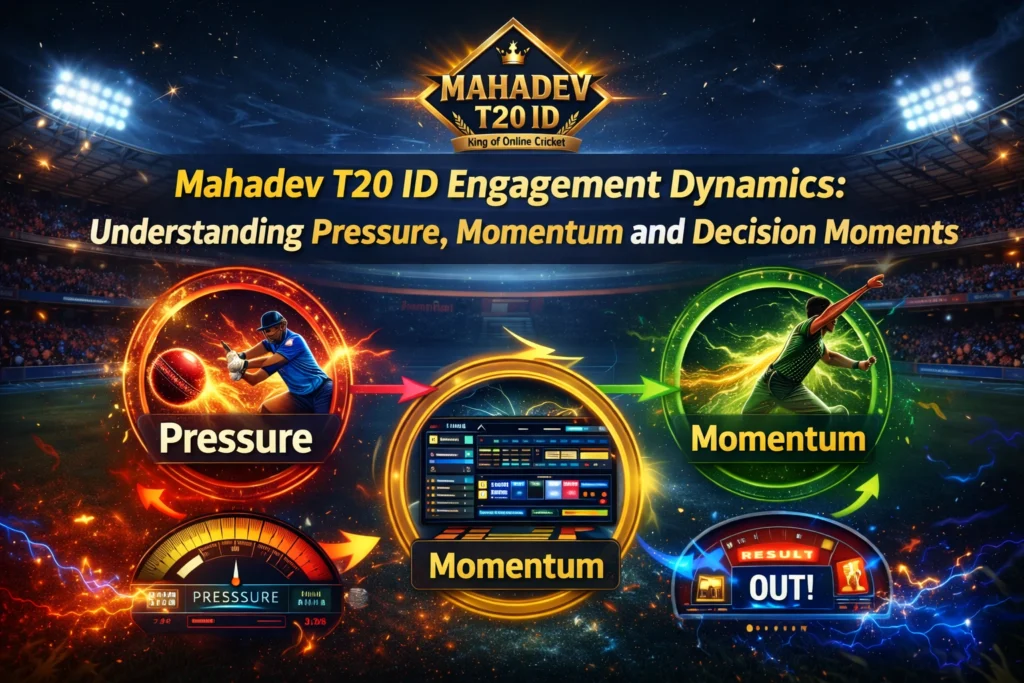
Inside the fast environment of T20 cricket, the match rarely follows a straight path. Instead, it moves in waves — pressure builds, releases, shifts, and returns again. The Mahadev T20 ID experience is built around observing these waves clearly. Rather than only seeing runs and wickets, Mahadev T20 ID emphasizes why situations change and how quickly they evolve.
A normal viewer notices events.
A Mahadev T20 ID user notices transitions.
These transitions form the true story of a T20 match.
Pressure Overs in Mahadev T20 ID
Pressure does not always appear dramatic. Sometimes a sequence of quiet deliveries affects the match more than a boundary. Mahadev T20 ID highlights such moments because tension often grows silently.
During pressure overs:
- Dot balls accumulate
- Batters hesitate to attack
- Risk increases with every delivery
Through Mahadev T20 ID observation, users recognize that a maiden over in T20 is not just rare — it is psychologically powerful. Even a four-run over can shift balance toward the bowling side.
Instead of reacting after a wicket, the Mahadev T20 ID environment helps users anticipate it.
Momentum Swings Observed Through Mahadev T20 ID
Momentum in cricket is invisible yet decisive. One aggressive over can undo five disciplined overs. Mahadev T20 ID makes these changes clearer by emphasizing sequence over isolated events.
A common swing pattern:
- Tight over creates pressure
- Batter attempts release shot
- Boundary or wicket changes direction
Users following Mahadev T20 ID understand that big moments rarely occur randomly. They are triggered by buildup. This awareness transforms excitement into understanding.
Decision Moments and Turning Points
Every match contains one or two defining decisions — a bowling change, a batting promotion, or a field adjustment. Mahadev T20 ID users begin noticing these before commentators mention them.
Decision moments often include:
- Introducing a spinner against a new batter
- Holding a strike bowler for the final overs
- Accelerating scoring earlier than expected
By watching through Mahadev T20 ID, fans identify turning points while they happen, not after replays. The match becomes a live puzzle being solved ball by ball.
Reading Batter Intent
Not all aggressive shots mean confidence, and not all defensive shots mean caution. Mahadev T20 ID encourages users to interpret intent rather than outcome.
Indicators visible within Mahadev T20 ID tracking:
- Repeated targeting of a field gap
- Sudden increase in running between wickets
- Change in stance or hitting arc
These signs suggest strategy. The viewer begins to see planning instead of randomness.
Bowling Strategy Awareness
T20 bowling depends heavily on variation — slower balls, yorkers, length changes. Mahadev T20 ID users often track patterns across overs rather than isolated deliveries.
For example:
- A bowler may test length early
- Then switch to wide yorkers later
- Finally attack stumps under pressure
Recognizing this sequence makes the match predictable in structure even if unpredictable in outcome. Mahadev T20 ID therefore enhances tactical appreciation.
The Role of Required Run Rate
The required run rate acts like a heartbeat of the chase. Mahadev T20 ID continuously aligns user perception with this number.
When the rate climbs:
- Batters feel urgency
- Field spreads differently
- Risk tolerance increases
When the rate falls:
- Bowling side pressures for wickets
- Batting side rotates strike calmly
Through Mahadev T20 ID, users observe how the same score feels different depending on overs remaining. Context becomes more important than totals.
Partnership Value Recognition
In T20 cricket, partnerships are short but vital. Even a 25-run stand can reshape the chase. Mahadev T20 ID focuses on continuity rather than individual shots.
Users start identifying:
- Stabilizing partnerships after wickets
- Accelerating partnerships near death overs
- Tactical partnerships targeting specific bowlers
The match stops being about single heroes and becomes about collective rhythm.
Anticipating the Final Over Scenario
One of the biggest appeals of T20 cricket is the last over finish. Mahadev T20 ID prepares the user mentally long before it arrives.
By observing trends, users estimate:
- Likely runs needed in final over
- Key bowler availability
- Batter confidence level
When the final over begins, the situation feels earned rather than sudden. The viewer has followed the buildup step by step.
Mental Engagement Cycle
Mahadev T20 ID creates a repeating engagement loop:
Observation → Interpretation → Expectation → Result → Re-evaluation
Because this cycle repeats every ball, attention never drops. The match becomes interactive even without physical involvement.
Cricket Awareness Development
Over time, consistent use of Mahadev T20 ID changes how people watch cricket everywhere — even offline. They begin noticing strategy naturally while watching television or highlights.
They understand:
- Why captains delay certain bowlers
- Why batters slow scoring temporarily
- Why field placements signal plans
The platform therefore acts as a learning environment, not just an engagement environment.
In essence, the Mahadev T20 ID experience transforms cricket from a sequence of events into a chain of decisions and consequences. Pressure overs create momentum, momentum creates turning points, and turning points create results. By observing these layers continuously, the fan becomes part analyst, part strategist, and fully immersed in the unfolding match narrative.
The Viewing Comfort Layer: A Calm Side of the Digital Match Experience

Not every cricket moment is explosive. Between the noise of boundaries and the tension of final overs lies a quieter part of the match — the phase where viewers simply settle in and follow the flow. This calmer rhythm is just as important as high-pressure moments because it allows the mind to absorb what has already happened and prepare for what may come next.
In a digital cricket environment, this relaxed engagement matters. Constant intensity can feel overwhelming, but balanced pacing makes the overall experience smoother and more enjoyable. Instead of pushing attention every second, the platform gradually adapts to the tempo of the match. When the game slows down, the interaction slows down too.
Gentle Tracking Instead of Constant Urgency
During long partnerships or steady scoring phases, viewers often prefer quiet observation rather than active analysis. The system reflects this by presenting information in a softer way — clear, readable, and easy to follow without demanding reaction.
Typical calm-phase behavior includes:
- Checking score progression occasionally
- Watching partnerships build naturally
- Understanding match direction without pressure
This relaxed interaction keeps the experience comfortable. The viewer remains informed but not overloaded.
Break Moments and Mental Reset
Strategic time-outs, innings breaks, and small pauses play a psychological role. They give space to process the story of the game so far. Instead of rushing to the next highlight, the viewer reflects on patterns that shaped the current situation.
During these intervals people usually:
- Recall key overs
- Think about possible outcomes
- Discuss the match casually
The environment becomes conversational rather than analytical. It mirrors how friends talk about cricket during tea breaks — simple, reflective, and easygoing.
Casual Following While Multitasking
Modern viewing rarely happens in isolation. Matches often run in the background while daily life continues. A well-designed experience respects this behavior by allowing light engagement without losing context.
This means a person can:
- Step away briefly
- Return without confusion
- Understand the situation quickly
The match remains accessible even when attention shifts. Instead of demanding focus, it welcomes it whenever available.
Comfort of Predictable Layout
Familiarity reduces effort. When information appears consistently in the same place, the brain learns where to look without thinking. Over time the viewer navigates naturally, almost instinctively.
The benefit is subtle but important — energy goes into enjoying cricket rather than figuring out controls or searching for details.
Balanced Emotional Pace
T20 matches naturally swing between excitement and patience. A balanced environment respects both states. High-energy overs bring intensity, while quieter overs allow breathing space.
This emotional pacing prevents fatigue. By the time the final overs arrive, anticipation feels fresh rather than exhausting.
A Companion Rather Than a Distraction
The calm layer of the experience acts like a companion sitting beside the viewer. It does not interrupt the match; it gently supports understanding. The main action stays on the field, while the digital side quietly keeps track of context.
Because of this, the viewer never feels pulled away from the game. Instead, the surrounding information feels like part of the same story.
Enjoyment Over Analysis
Some fans enjoy deep strategy, while others simply enjoy the atmosphere. A relaxed interaction style allows both types to coexist. The experience can be analytical when desired and simple when preferred.
On certain days, following the score casually is enough. The environment adapts to that mood, letting cricket remain entertainment rather than effort.
Ending the Session Naturally
When the match concludes, the experience fades gently. Instead of abrupt closure, the final state leaves a clear memory of how the game unfolded — key moments remembered without replaying every ball mentally.
This smooth ending encourages viewers to return next time with the same comfort they felt before.
In the broader picture, the digital cricket space is not only about speed and intensity. It also includes pauses, reflection, and effortless following. These quieter moments create balance, ensuring the match remains enjoyable from the first over to the last without overwhelming the viewer.
Everyday Usage Patterns: How the Experience Fits Into Daily Life
Cricket matches rarely align perfectly with personal schedules. Some start during work hours, others continue late into the night, and many stretch across routine activities. Because of this, a modern viewing setup must adapt to real life rather than asking life to pause. The digital interaction layer naturally blends into daily routines, letting people follow the game in fragments instead of fixed sessions.
Instead of sitting for four uninterrupted hours, viewers now create their own rhythm — checking in, stepping away, and returning again without losing the narrative.
Morning Check-Ins
For matches played in different time zones, the first interaction often happens early in the day. People wake up, glance at the match situation, and understand what has unfolded overnight.
Typical morning behavior:
- Quick look at the current score
- Noticing which team holds advantage
- Catching a brief summary of key moments
This short interaction sets context for the day without demanding full attention.
Midday Glances During Busy Hours
Work and study schedules limit long viewing sessions. Instead, people prefer small updates between tasks. The experience supports these short visits by presenting essential information clearly and quickly.
During busy periods, viewers usually:
- Check progress during breaks
- Observe turning points
- Continue daily tasks afterward
The match remains present in the background, never fully interrupting responsibilities.
Evening Deep Engagement
As schedules relax, attention increases. Many viewers choose the later overs to watch more closely because tension naturally rises near the finish. At this stage the interaction becomes more focused and continuous.
Evening habits often include:
- Watching consecutive overs
- Discussing possibilities with friends
- Anticipating the final result
The shift from casual following to active interest happens naturally as stakes increase.
Social Conversations Around the Game
Cricket rarely stays confined to a screen. It moves into conversations — at home, at work, and online. A shared understanding of the match allows discussions to begin instantly without long explanations.
Common discussion topics:
- Key player performances
- Strategic decisions
- Surprising momentum changes
These conversations become part of the entertainment itself. The match lives beyond its broadcast duration.
Weekend Viewing Patterns
On days off, people prefer longer viewing sessions. They watch multiple phases of the match rather than selected moments. The experience adjusts easily — what was earlier a background companion becomes a primary activity.
Weekend viewing usually feels:
- More relaxed
- More attentive
- More immersive
The same system supports both quick weekday checks and extended weekend enjoyment.
Night-Time Final Moments
Late-night finishes hold special appeal. Quiet surroundings increase focus, making the last overs feel more intense. Many viewers stay awake specifically for the conclusion, even if they followed casually earlier.
These final minutes often leave the strongest memory — a successful chase, a dramatic defense, or a last-ball twist.
Seamless Start and Stop
A key part of daily integration is the ability to pause attention and return without confusion. Whether stepping away for a call, meal, or commute, viewers can reconnect instantly and understand the situation.
This flexibility turns cricket into a continuous background story rather than a scheduled event.
Habit Formation Over Time
Repeated exposure builds habit. Checking match status becomes as natural as checking the weather. Over weeks and tournaments, the activity fits comfortably into routine without effort.
Eventually, following the game feels less like an extra task and more like a familiar daily moment.
In everyday life, cricket engagement is no longer limited to sitting in front of a television from start to finish. It flows through the day — short glances, longer sessions, conversations, and memorable endings. The experience adapts to the viewer’s schedule, allowing the sport to remain present without demanding constant attention.
Closing Perspective: The Modern Cricket Experience in a Connected World
Cricket has always evolved with time. From radio commentary to television broadcast and now digital interaction, the journey reflects how fans want to stay closer to the game. The Mahadev T20 ID idea fits into this modern environment — a space where awareness never stops and engagement becomes flexible.
Today, following a match no longer means sitting in one place for hours. Instead, fans stay connected throughout the day and return whenever excitement builds. Many readers also explore match-related insights and community discussions through platforms like Betbhai9, where ongoing conversations extend the experience beyond the live match.
From Scheduled Watching to Continuous Awareness
Earlier, missing a match meant waiting for next-day highlights. Now the connection remains ongoing. Viewers check updates, return later, and still understand the complete story.
This shift changes memory formation:
- The result matters
- The journey matters more
- The turning moments stay remembered
Because interaction is constant, fans feel they witnessed the match rather than only learning its outcome.
Personal Connection With the Game
Different viewers engage differently. Some follow every delivery closely, others join near the finish. Both remain connected because the narrative stays accessible.
A dedicated follower tracks the build-up.
A casual viewer joins at the climax.
Through environments connected to platforms such as Mahadev IPL ID Official Site, access becomes immediate and flexible, allowing the fan to reconnect anytime without confusion. The experience adapts to the person rather than forcing routine.
Blending Technology With Tradition
Even with digital support, cricket’s emotional core stays untouched. The anticipation before a big shot, the silence before a final ball, and the celebration after victory still define the sport.
Technology simply ensures:
- The moment is not missed
- The context is understood
- The reaction is shared instantly
The field creates emotion; the digital layer preserves awareness.
Shared Experiences Without Distance
Fans no longer need to be in the same room to react together. Messages, discussions, and shared updates create synchronized reactions. Someone in another city celebrates the same boundary at the same second.
The match becomes a shared timeline rather than a shared location.
The Meaning of the Final Over
Every T20 match builds toward a decisive ending. When viewers remain connected throughout, the last over feels meaningful rather than sudden. Each earlier moment explains why the finish unfolded the way it did.
The result becomes a conclusion, not just a surprise.
Final Thought
Cricket’s beauty lies in uncertainty. The modern connected environment simply ensures fans travel alongside that uncertainty from the first ball to the last. The Mahadev T20 ID concept captures this relationship — not replacing the match, but accompanying it continuously.
The ground produces the action.
The digital connection preserves the journey.
And the fan experiences both together, wherever they are.
Frequently Asked Questions (FAQ)
1. What is Mahadev T20 ID?
Mahadev T20 ID refers to a digital access profile that allows users to follow live T20 cricket action in a real-time interactive environment. It helps fans stay connected with ongoing matches, understand match flow, and remain updated without depending only on traditional viewing.
2. How does Mahadev T20 ID improve the cricket experience?
It keeps the viewer continuously aware of match progress. Instead of checking scores occasionally, users receive structured updates that help them follow momentum, partnerships, and turning points throughout the game.
3. Is Mahadev T20 ID only for live matches?
No. While it is most useful during live matches, users can also understand completed match summaries and revisit key phases of a game after it finishes.
4. Do I need to watch the full match to use Mahadev T20 ID?
Not necessarily. One of its main advantages is flexibility. A viewer can check briefly, leave, and return later without losing the overall context of the match.
5. Can beginners understand cricket better using Mahadev T20 ID?
Yes. Because it presents match developments step-by-step, new fans can gradually learn how momentum changes, how overs impact outcomes, and why certain moments become decisive.
6. Does Mahadev T20 ID replace watching cricket on television?
No. It works alongside traditional viewing. Television shows the visual action, while the digital layer helps interpret the situation and maintain awareness when the viewer is away.
7. Is Mahadev T20 ID suitable for casual fans?
Yes. Casual viewers can follow only important moments, while dedicated fans can stay connected ball-by-ball. The experience adapts to different levels of interest.
8. Why is real-time interaction important in T20 cricket?
T20 matches move quickly. Situations change within minutes, so real-time awareness allows viewers to understand pressure and momentum rather than only the final result.
9. Can I follow matches from anywhere using Mahadev T20 ID?
Yes. Since it works digitally, fans can remain updated from different locations and schedules without needing a fixed viewing setup.
10. What makes Mahadev T20 ID different from basic score updates?
Basic scores only show numbers. Mahadev T20 ID focuses on context — explaining how those numbers affect the match direction and why each phase matters.