
Introduction
Online games gambling has emerged as one of the most dynamic and controversial sectors of the digital entertainment world. What once required a visit to a physical casino or betting shop can now be accessed instantly through smartphones, laptops, and tablets. With just a few clicks, players can spin virtual slot machines, join live poker tables, place sports bets, or participate in real-time dealer games from virtually anywhere in the world.
The rapid growth of internet technology, secure digital payment systems, and mobile applications has completely reshaped the gambling landscape. Today’s online gambling platforms are more advanced, interactive, and immersive than ever before. High-definition graphics, live streaming features, artificial intelligence, and instant transactions have transformed traditional gambling into a fast-paced digital experience designed to engage users continuously.
However, alongside its popularity and convenience, online games gambling also raises important questions about financial risk, psychological impact, regulation, and responsible participation. While millions of users view it as a form of entertainment, others struggle with its addictive potential and financial consequences.
This article explores the complete picture of online games gambling — its evolution, types, technology, benefits, risks, legal considerations, and future trends. By understanding both the opportunities and challenges, readers can make more informed and responsible decisions in the rapidly expanding world of digital gambling.
The Evolution of Online Games Gambling in the Digital Era
Online games gambling did not become a global phenomenon overnight. Its journey began with simple digital adaptations of traditional casino games, but today it stands as a multi-billion-dollar industry powered by cutting-edge technology and global connectivity.
From Physical Casinos to Digital Platforms
In the early days, gambling was limited to land-based casinos, betting shops, and racetracks. Players had to physically visit a location to place bets or enjoy casino games. This model restricted participation based on geography and accessibility.
With the expansion of the internet in the late 1990s and early 2000s, the first online casino platforms emerged. These early websites offered basic graphics and limited functionality, but they introduced a revolutionary concept — gambling from home.
The Mobile Gaming Explosion
The real transformation occurred with the rise of smartphones. Mobile-friendly gambling websites and dedicated betting apps allowed users to play anytime, anywhere. Whether commuting, relaxing at home, or traveling, users could instantly access online games gambling platforms.
Mobile optimization also improved user experience through:
- Faster loading times
- Secure one-click payments
- Live betting features
- Push notifications for offers and events
This shift significantly increased user engagement and daily active players.
Integration of Advanced Technology
Modern online games gambling platforms now incorporate advanced technologies such as:
- Artificial Intelligence for personalized recommendations
- Live streaming for real-time casino tables
- Secure encryption protocols for safe transactions
- Blockchain-based payment options
- Data analytics to improve gameplay experience
These innovations have enhanced transparency, security, and interactivity.
Growth of Global User Base
As internet access expanded globally, online games gambling reached new markets. Countries with regulated gambling industries saw rapid growth, while offshore platforms also attracted international players.
The industry now caters to diverse audiences, offering multilingual interfaces, multiple currency options, and localized sports betting markets.
Social and Competitive Features
Today’s platforms go beyond simple betting. They include:
- Multiplayer tournaments
- Leaderboards
- Loyalty programs
- Referral bonuses
- In-game chat systems
These features create a more engaging and community-driven environment, increasing player retention.
The evolution of online games gambling reflects a broader digital transformation happening across industries. What started as a digital alternative to traditional casinos has evolved into a sophisticated ecosystem combining entertainment, technology, finance, and global connectivity.
Types of Online Games Gambling Platforms
Online games gambling is not limited to one format or category. The industry offers a wide variety of gaming and betting options designed to attract different types of players. From fast-paced slot machines to strategic poker tournaments, each category provides a unique experience.
1. Online Casino Games
Online casino games are the foundation of digital gambling platforms. These are virtual versions of traditional casino games that can be played through websites or mobile apps.
Popular online casino games include:
- Slot Machines
- Blackjack
- Roulette
- Baccarat
- Poker
- Teen Patti
- Andar Bahar
Slot games are especially popular because they are simple to play and offer visually engaging themes. Table games like blackjack and poker attract players who prefer skill-based elements and strategic gameplay.
Live casino games have also gained massive popularity. These games use real dealers who stream gameplay in real time, creating a more authentic and immersive experience.
2. Sports Betting
Sports betting is one of the fastest-growing segments of online games gambling. Players can place wagers on various sports events worldwide.
Common betting markets include:
- Cricket
- Football
- Tennis
- Basketball
- Horse Racing
- Kabaddi
Sports betting platforms offer pre-match betting and live betting (in-play betting), where odds change dynamically during the match. Live betting increases excitement and engagement because users can respond to real-time developments.
3. Esports Betting
With the rapid growth of competitive gaming, esports betting has become a major category in online gambling.
Players can bet on professional tournaments featuring popular games such as:
- Battle royale games
- First-person shooter games
- Multiplayer online battle arena (MOBA) games
Esports betting attracts a younger audience familiar with digital gaming culture.
4. Fantasy Sports Platforms
Fantasy sports involve creating virtual teams based on real players. Users earn points depending on how those players perform in actual matches.
Unlike pure luck-based games, fantasy sports require knowledge, research, and strategy. However, since real money is often involved, they fall within the broader scope of online games gambling in many regions.
5. Lottery and Bingo Platforms
Online lottery and bingo platforms appeal to users looking for low-entry-cost gambling options. These games are simple and rely entirely on chance.
Digital lottery systems allow players to participate in national and international draws. Online bingo rooms often include chat features, making them more interactive and social.
6. Skill-Based Card Games
Some online gambling platforms also offer card games that involve both skill and luck, such as:
- Rummy
- Poker variations
- Teen Patti tournaments
These games often include competitive tournaments with prize pools and leaderboards.
7. Cryptocurrency Gambling Platforms
A growing trend in online games gambling is the use of cryptocurrency for deposits and withdrawals. Crypto-based platforms offer:
- Faster transactions
- Lower fees
- Enhanced privacy
- Blockchain transparency
This segment is expanding rapidly as digital currencies become more mainstream.
Choosing the Right Platform Type
Each type of online games gambling platform serves a different user preference. Some players prefer quick and simple slot games, while others enjoy strategic poker sessions or live sports betting.
Before choosing a platform, users should consider:
- Game variety
- Payment options
- Security measures
- Licensing and regulation
- Customer support availability
Understanding the different types of online games gambling platforms helps players make informed decisions and select experiences that align with their interests and risk tolerance.
How Online Games Gambling Platforms Work
Understanding how online games gambling platforms operate helps players make informed decisions and recognize the systems working behind the scenes. While the interface may appear simple and entertaining, these platforms rely on complex technology, strict security systems, and structured operational models.
1. Account Registration and Verification
The first step in online games gambling is creating a user account. Players typically provide:
- Name and contact details
- Date of birth (age verification)
- Email or mobile number
- Identity documents (in regulated markets)
Verification is important for preventing fraud, underage gambling, and money laundering. Licensed platforms follow strict Know Your Customer (KYC) procedures to ensure compliance with legal standards.
2. Deposits and Payment Systems
After registration, users must deposit funds into their gambling accounts. Modern platforms support multiple payment methods, such as:
- Debit and credit cards
- Bank transfers
- UPI and digital wallets
- Prepaid vouchers
- Cryptocurrencies
Secure encryption protocols protect financial transactions. Reputable platforms use SSL (Secure Socket Layer) technology to safeguard sensitive data.
Withdrawals follow a similar process, though verification checks may be required before funds are released.
3. Game Software and Random Number Generators (RNG)
Most online casino games operate using Random Number Generator (RNG) software. RNG ensures that:
- Game outcomes are unpredictable
- Results cannot be manipulated
- Each spin or card dealt is independent
Independent testing agencies often audit licensed platforms to verify fairness.
For live casino games, real dealers operate from studios, and outcomes are determined by actual physical actions (like spinning a roulette wheel or dealing cards).
4. Betting Odds and House Edge
In online games gambling, platforms generate revenue through what is known as the “house edge.” This is a mathematical advantage built into each game or betting market.
For example:
- Slot machines have a programmed return-to-player (RTP) percentage
- Sports betting odds include a margin for the bookmaker
- Table games have statistically calculated probabilities
The house edge ensures the platform remains profitable over time, regardless of short-term player wins.
5. Bonuses and Promotional Systems
To attract and retain users, platforms offer various promotions, such as:
- Welcome bonuses
- Deposit match bonuses
- Free spins
- Cashback offers
- Loyalty rewards
These promotions often come with wagering requirements, meaning players must bet a certain amount before withdrawing bonus winnings.
Understanding terms and conditions is essential to avoid confusion.
6. Security and Data Protection
Online games gambling platforms handle sensitive personal and financial information. Therefore, security is critical.
Key security features include:
- SSL encryption
- Two-factor authentication (2FA)
- Firewalls and anti-fraud monitoring
- Secure payment gateways
Advanced platforms also use AI systems to detect suspicious behavior and prevent account misuse.
7. Responsible Gambling Tools
Reputable gambling platforms provide tools that help users maintain control, such as:
- Deposit limits
- Loss limits
- Session time reminders
- Self-exclusion options
- Account cooling-off periods
These features are designed to promote responsible gambling and reduce harmful behavior.
8. Customer Support Systems
Reliable platforms offer customer support through:
- Live chat
- Email assistance
- Phone support
- FAQ sections
Quick response times improve trust and user satisfaction.
Behind the User Experience
While players see an attractive interface with engaging games and betting options, behind the scenes, online games gambling platforms operate using:
- Advanced software architecture
- Payment processing systems
- Compliance frameworks
- Risk management algorithms
- Data analytics engines
This combination of technology, finance, and entertainment creates the seamless digital experience users interact with daily.
Benefits and Advantages of Online Games Gambling
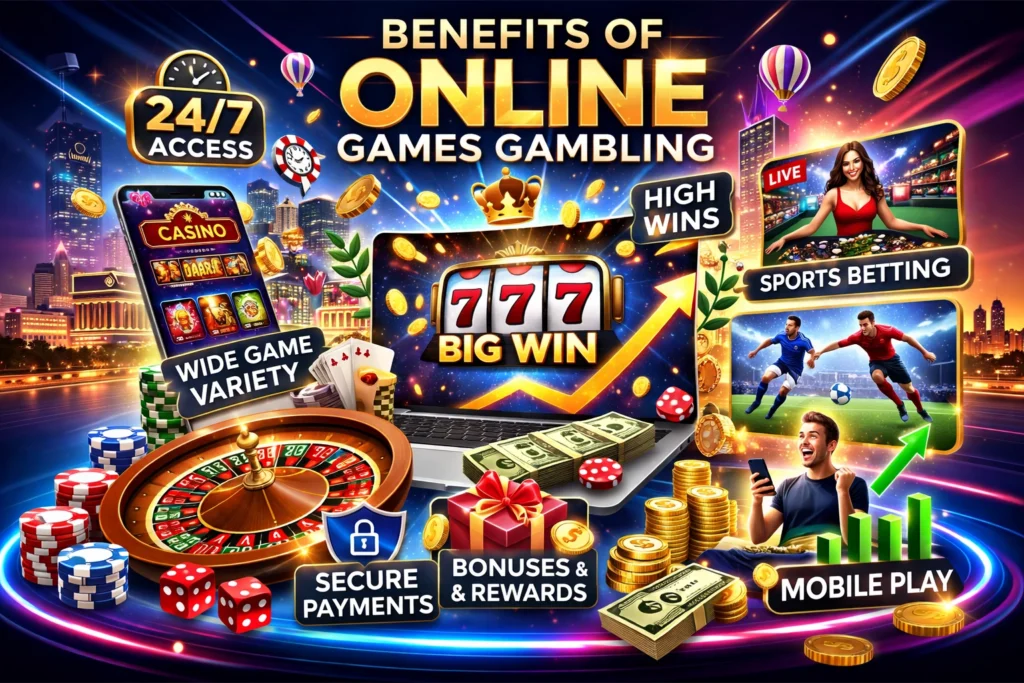
Online games gambling has gained massive popularity not only because of technological advancements but also due to the many advantages it offers to users. While it involves financial risk, millions of people participate because of the convenience, entertainment value, and potential rewards associated with digital gambling platforms.
Below are the major benefits and advantages of online games gambling.
1. Convenience and Accessibility
One of the biggest advantages of online games gambling is accessibility. Players no longer need to travel to physical casinos or betting centers. Everything is available at their fingertips through:
- Smartphones
- Tablets
- Laptops
- Desktop computers
This 24/7 availability allows users to play anytime, whether during a lunch break, while traveling, or relaxing at home.
2. Wide Variety of Games
Physical casinos have limited space, but online platforms can host thousands of games simultaneously.
Players can choose from:
- Hundreds of slot themes
- Multiple blackjack variations
- Different poker formats
- Live dealer tables
- Sports betting markets worldwide
This variety ensures that users never run out of options and can explore new formats easily.
3. Attractive Bonuses and Promotions
Online platforms compete heavily for customers, which benefits players through generous promotions such as:
- Welcome bonuses
- Free spins
- No-deposit bonuses
- Cashback offers
- Referral rewards
- Loyalty programs
These offers provide additional playing opportunities and sometimes reduce initial financial risk.
4. Privacy and Discretion
Many users prefer online games gambling because it offers privacy. There is no need to visit public gambling venues. Transactions and gameplay occur digitally, allowing players to participate discreetly.
For individuals who value confidentiality, this is a major advantage.
5. Lower Entry Costs
Online gambling platforms often allow smaller minimum deposits compared to physical casinos. Some slot games can be played with very small bets, making participation more affordable.
This flexibility allows users with different budgets to engage comfortably.
6. Advanced Technology and Immersive Experience
Modern online games gambling platforms use advanced graphics, sound effects, and live streaming technology to create immersive experiences.
Features include:
- Real-time live dealers
- HD streaming
- Interactive chat functions
- Animated gameplay
- Instant results
These elements enhance user engagement and replicate the atmosphere of real casinos.
7. Flexible Payment Options
Online platforms support various payment methods, including:
- Bank transfers
- Credit/debit cards
- Digital wallets
- UPI
- Cryptocurrencies
This flexibility makes transactions faster and more convenient compared to traditional methods.
8. Global Participation
Online games gambling removes geographical limitations. Players can access international sports markets, global poker tournaments, and worldwide casino games without traveling.
This global access increases competition, prize pools, and overall entertainment value.
9. Skill Development Opportunities
Certain gambling formats, such as poker and fantasy sports, require analytical thinking, strategy, and research. Skilled players may improve decision-making abilities and risk management skills over time.
However, it is important to remember that no strategy guarantees consistent profits due to inherent risks.
10. Entertainment and Excitement
At its core, online games gambling is a form of entertainment. The thrill of anticipation, the excitement of winning, and the interactive features create a dynamic digital experience.
For many participants, it serves as a recreational activity when approached responsibly.
Balanced Perspective
While online games gambling offers numerous benefits, these advantages must be weighed against potential risks. Responsible participation is key to ensuring that entertainment does not turn into financial or emotional harm.
Understanding both the positive aspects and possible drawbacks helps individuals make informed decisions.
Risks and Challenges of Online Games Gambling
While online games gambling offers convenience and entertainment, it also carries serious risks. The digital nature of these platforms makes gambling faster, more accessible, and sometimes harder to control. Understanding the potential dangers is essential for anyone considering participation.
Below are the major risks and challenges associated with online games gambling.
1. Financial Loss
The most immediate risk is losing money. Gambling is designed with a built-in house edge, meaning platforms have a long-term mathematical advantage. While short-term wins are possible, consistent profits are unlikely for most players.
Common financial risks include:
- Spending more than planned
- Chasing losses
- Using borrowed money to gamble
- Ignoring essential expenses
Without strict budgeting, losses can escalate quickly.
2. Gambling Addiction
Online accessibility increases the risk of addiction. Since platforms operate 24/7, players can gamble at any time without physical barriers.
Addictive behavior may include:
- Constantly thinking about gambling
- Increasing bet sizes to feel excitement
- Hiding gambling activity from family
- Feeling anxious or irritable when not gambling
- Continuing to gamble despite losses
The instant nature of online betting can intensify compulsive behavior.
3. Easy Access and Lack of Physical Limits
Unlike physical casinos, online platforms remove many natural stopping points. There are no closing hours, no travel requirements, and no social visibility.
This unlimited access can lead to:
- Long gambling sessions
- Emotional decision-making
- Reduced awareness of time and spending
Without self-control, players may lose track of both time and money.
4. Fraudulent and Unlicensed Platforms
Not all online gambling websites operate legally. Some unregulated platforms may:
- Manipulate game outcomes
- Refuse withdrawals
- Disappear with user funds
- Misuse personal data
Players who fail to verify licensing and reputation risk financial and identity theft issues.
5. Cybersecurity Threats
Because online games gambling involves digital payments and personal data, cybersecurity risks exist.
Potential threats include:
- Hacking
- Phishing scams
- Identity theft
- Data breaches
Using weak passwords or unsecured networks increases vulnerability.
6. Psychological and Emotional Impact
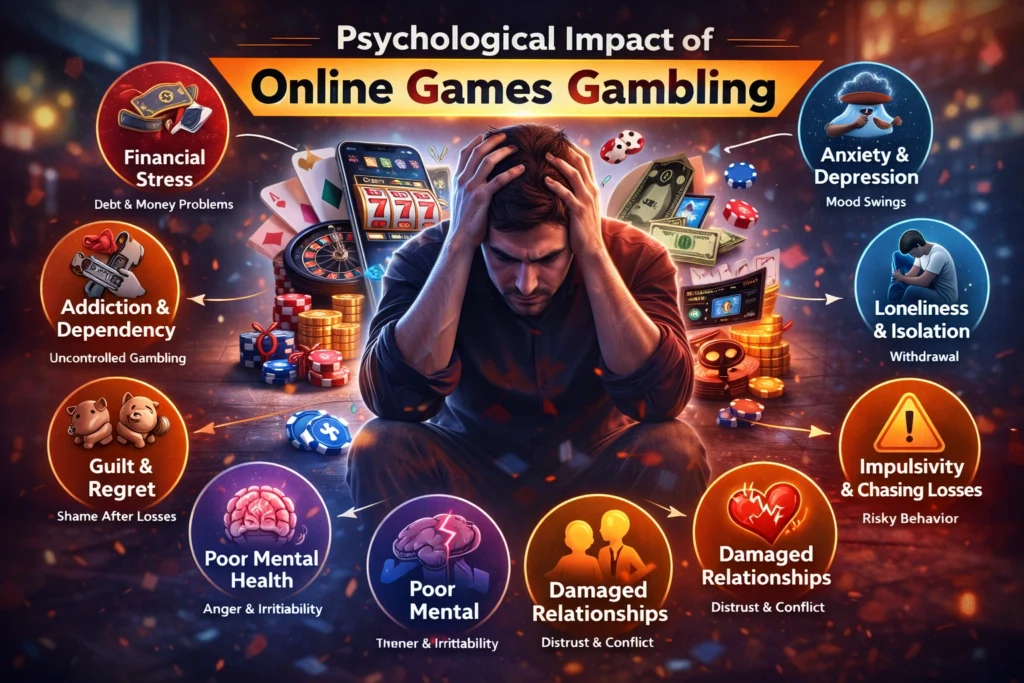
Gambling affects emotional stability. Winning can create temporary excitement, while losing may cause stress, frustration, or depression.
Common psychological effects include:
- Mood swings
- Overconfidence after wins
- Desperation after losses
- False belief in patterns or “lucky streaks”
These emotional responses often lead to poor decision-making.
7. Social and Relationship Problems
Excessive online games gambling can strain relationships. Financial stress, secrecy, and emotional instability may lead to conflicts with family and friends.
Over time, gambling problems can cause:
- Loss of trust
- Reduced productivity
- Work-related issues
- Social isolation
8. Legal Uncertainty in Some Regions
In certain countries, online gambling operates in legal gray areas. Players using offshore platforms may face:
- Payment restrictions
- Blocked accounts
- Legal consequences
Understanding local regulations is important before participating.
Recognizing Warning Signs Early
Early recognition of problematic behavior can prevent serious consequences. Warning signs include:
- Gambling to escape stress
- Spending beyond limits
- Feeling guilty about gambling
- Repeated unsuccessful attempts to stop
Seeking help at the right time can reduce long-term damage.
The Importance of Awareness
Online games gambling is not inherently harmful, but its risks increase without awareness and self-discipline. Responsible participation requires:
- Setting strict budgets
- Avoiding emotional betting
- Taking regular breaks
- Using responsible gambling tools
Balancing entertainment with caution is essential in the digital gambling environment.
Psychological Impact of Online Games Gambling
Online games gambling is not just a financial activity—it deeply affects human psychology. The structure of digital gambling platforms is carefully designed to stimulate emotions, encourage engagement, and maintain user participation. Understanding the psychological mechanisms behind gambling can help individuals recognize both its appeal and its potential dangers.
1. The Role of Dopamine and Reward Systems
When a person places a bet or spins a slot machine, the brain releases dopamine—a chemical associated with pleasure and reward. This release happens not only when winning but also during anticipation.
The uncertainty of outcomes makes gambling particularly powerful. The brain responds strongly to unpredictable rewards, which is why online games gambling can feel exciting and addictive.
Even near-misses—when a player almost wins—can trigger similar brain responses, encouraging continued play.
2. The Illusion of Control
Many players believe they can influence outcomes, even in games based purely on chance. This is known as the “illusion of control.”
Examples include:
- Believing a certain time is luckier
- Following betting patterns
- Trusting “hot” or “cold” streaks
- Assuming skill affects slot results
In reality, most casino games rely on random number generators, making outcomes independent of previous results.
3. Chasing Losses
One of the most dangerous psychological patterns in online games gambling is chasing losses. After losing money, players may feel a strong urge to win it back immediately.
This mindset often leads to:
- Increasing bet sizes
- Taking higher risks
- Ignoring preset budgets
- Emotional decision-making
Chasing losses can quickly escalate financial damage.
4. Overconfidence After Wins
Winning can create a false sense of skill or superiority. Players may believe they have discovered a strategy or system that guarantees success.
This overconfidence can result in:
- Larger wagers
- Riskier bets
- Reduced caution
- Long-term financial losses
Short-term wins do not change the mathematical house edge.
5. Emotional Gambling
Many individuals use online games gambling as a way to cope with stress, boredom, loneliness, or frustration.
Emotional gambling often leads to:
- Impulsive betting
- Ignoring consequences
- Increased dependency on gambling for mood improvement
Using gambling as emotional relief can create unhealthy behavioral patterns.
6. Time Distortion Effect
Online platforms are designed to be immersive. Flashing graphics, sounds, fast gameplay, and instant results can cause players to lose track of time.
This time distortion effect may result in:
- Extended gambling sessions
- Sleep disruption
- Neglect of responsibilities
The lack of physical environment cues makes it easier to gamble longer than intended.
7. Social Influence and Peer Pressure
With the rise of live betting communities, social media promotions, and influencer marketing, players may feel encouraged to participate more frequently.
Seeing others celebrate wins online can create:
- Fear of missing out (FOMO)
- Unrealistic expectations
- Competitive pressure
However, losses are rarely shared publicly, creating a distorted perception of success.
Building Psychological Awareness
Understanding these psychological triggers is essential for responsible participation. Players can protect themselves by:
- Setting clear limits before playing
- Avoiding gambling during emotional stress
- Recognizing that outcomes are random
- Taking breaks regularly
- Viewing gambling strictly as entertainment, not income
Awareness reduces vulnerability to impulsive decisions.
The Importance of Mental Balance
Online games gambling can provide excitement and recreation when approached with discipline. However, without self-control, psychological triggers can override rational thinking.
Maintaining mental balance, emotional awareness, and financial boundaries is critical in navigating the digital gambling landscape safely.
Legal and Regulatory Framework of Online Games Gambling
The legal status of online games gambling varies significantly across countries and regions. While some governments fully regulate and license digital gambling platforms, others impose strict restrictions or outright bans. Understanding the legal framework is essential for both operators and players to avoid risks and ensure compliance.
1. Regulated Markets
In regulated jurisdictions, online games gambling operates under strict government oversight. Licensed platforms must follow established rules designed to protect players and maintain fairness.
Regulatory authorities typically require:
- Official licensing approval
- Fair gaming certification
- Secure payment systems
- Anti-money laundering (AML) compliance
- Age verification procedures
- Responsible gambling policies
Licensed operators are often audited regularly to ensure transparency and fairness.
2. Restricted or Prohibited Regions
Some countries prohibit online gambling entirely due to cultural, religious, or social concerns. In these regions:
- Gambling websites may be blocked
- Payment transactions may be restricted
- Operators may face legal penalties
- Players may encounter legal risks
However, enforcement levels vary depending on local laws.
3. Offshore Gambling Platforms
In regions where gambling laws are unclear, many players use offshore platforms licensed in foreign jurisdictions. These platforms operate under international gaming authorities.
While some offshore operators are legitimate, risks may include:
- Limited legal protection for players
- Difficult dispute resolution
- Payment processing delays
- Inconsistent regulatory standards
Choosing a reputable licensed platform reduces such risks.
4. Taxation and Revenue
Governments in regulated markets collect significant revenue from online games gambling through:
- Licensing fees
- Corporate taxes
- Player winnings taxes
- Gaming duties
These funds often contribute to public services, infrastructure, and responsible gambling programs.
Tax obligations for players vary depending on local laws. In some countries, gambling winnings are taxable; in others, they are not.
5. Responsible Gambling Regulations
Many regulators require operators to implement responsible gambling measures, such as:
- Deposit and loss limits
- Self-exclusion options
- Cooling-off periods
- Gambling addiction helplines
- Warning messages
These regulations aim to minimize social harm while allowing the industry to operate legally.
6. Advertising Restrictions
To reduce overexposure and protect vulnerable populations, several countries impose advertising restrictions on online gambling companies.
These restrictions may include:
- Limited advertising hours
- Ban on targeting minors
- Mandatory risk disclaimers
- Prohibition of misleading promotions
Regulatory bodies continuously review marketing practices to ensure ethical standards.
7. Emerging Regulatory Trends
As online games gambling continues to grow, many governments are updating their laws to address:
- Cryptocurrency gambling
- Cross-border betting
- Data protection standards
- Artificial intelligence monitoring
- Esports betting regulation
The legal landscape remains dynamic and subject to change.
Why Legal Awareness Matters
Participating in online games gambling without understanding local regulations can lead to:
- Account suspensions
- Financial loss
- Legal complications
- Limited consumer protection
Players should always verify whether online gambling is permitted in their region and choose licensed operators whenever possible.
Balancing Regulation and Innovation
Governments face the challenge of balancing consumer protection with economic benefits. Too much restriction may push users toward unregulated markets, while too little oversight can increase social harm.
A well-regulated online games gambling environment promotes transparency, fairness, and player safety while supporting industry growth.
Responsible Gambling Practices and Player Protection
As online games gambling continues to expand globally, responsible gambling has become a central focus for regulators, operators, and players alike. While gambling can be an entertaining activity, maintaining control and awareness is essential to prevent financial and emotional harm.
Responsible gambling is about balance, discipline, and informed decision-making.
1. Setting Financial Limits
One of the most important responsible gambling practices is setting a clear budget before playing. Players should decide:
- How much money they can afford to lose
- How often they will deposit funds
- A maximum loss limit per session
This budget should only include disposable income, never money meant for essential expenses such as rent, bills, or savings.
2. Managing Time Spent Gambling
Online platforms operate 24/7, which can make it easy to lose track of time. Setting time limits helps maintain balance.
Helpful strategies include:
- Using session reminders
- Setting alarms
- Taking regular breaks
- Avoiding late-night gambling
Time control reduces impulsive decisions and mental fatigue.
3. Avoiding Emotional Gambling
Gambling while stressed, angry, depressed, or overly excited can lead to poor judgment. Emotional gambling increases the likelihood of chasing losses or making high-risk bets.
Players should only participate when they feel calm and in control.
4. Understanding the Odds
Online games gambling is based on probability, not guarantees. Knowing that:
- The house has a mathematical advantage
- Outcomes are random
- Long-term profit is unlikely
helps set realistic expectations. Gambling should be viewed as entertainment, not as a reliable income source.
5. Using Platform Safety Tools
Many reputable gambling platforms provide built-in safety features such as:
- Deposit limits
- Daily, weekly, or monthly loss limits
- Self-exclusion options
- Cooling-off periods
- Reality check notifications
These tools are designed to protect players from excessive behavior.
6. Recognizing Warning Signs
Early recognition of problematic gambling behavior can prevent serious consequences.
Warning signs include:
- Borrowing money to gamble
- Hiding gambling activity
- Feeling guilty after playing
- Repeatedly attempting to recover losses
- Neglecting responsibilities
If these signs appear, it may be time to take a break or seek help.
7. Seeking Professional Support
For individuals experiencing difficulty controlling gambling behavior, professional help is available in many regions.
Support options may include:
- Counseling services
- Addiction helplines
- Financial advisory assistance
- Support groups
Seeking help is a sign of strength, not weakness.
8. Role of Operators and Regulators
Online gambling operators share responsibility for promoting safe play. Ethical platforms:
- Monitor unusual betting patterns
- Flag high-risk behavior
- Provide educational resources
- Encourage limit-setting
- Restrict underage access
Regulators enforce compliance to ensure player protection remains a priority.
Creating a Healthy Gambling Mindset
Responsible gambling is not about avoiding entertainment—it is about maintaining control. A healthy mindset includes:
- Playing for fun, not for profit
- Accepting losses as part of the activity
- Walking away when limits are reached
- Keeping gambling separate from personal finances
Self-awareness and discipline are key.
Final Perspective
Online games gambling can offer excitement and enjoyment when approached responsibly. However, without limits and awareness, it can lead to financial strain and emotional stress.
Responsible participation ensures that gambling remains a controlled recreational activity rather than a harmful habit.
The Future of Online Games Gambling
The future of online games gambling is closely tied to rapid technological innovation, shifting consumer behavior, and evolving regulatory frameworks. As digital infrastructure improves globally, the industry is expected to expand further, introducing new experiences that combine entertainment, technology, and financial systems.
Below are the major trends likely to shape the next phase of online games gambling.
1. Artificial Intelligence and Smart Personalization
Artificial Intelligence (AI) is already transforming digital industries, and online gambling is no exception.
In the future, AI will be used to:
- Personalize game recommendations
- Detect unusual betting patterns
- Prevent fraud and money laundering
- Identify early signs of gambling addiction
- Improve customer support with intelligent chat systems
AI-driven systems will create more customized and safer gambling environments.
2. Virtual Reality (VR) and Augmented Reality (AR)
Virtual Reality casinos are expected to become more common as VR technology becomes affordable and widely adopted.
Players may soon:
- Walk through virtual casino floors
- Sit at digital poker tables with avatars
- Interact with other players in immersive environments
- Experience realistic casino atmospheres from home
AR technology may also enhance mobile gambling experiences with interactive overlays and real-time sports data.
3. Blockchain and Cryptocurrency Integration
Blockchain technology is gaining traction in online games gambling because it offers:
- Transparent transaction records
- Faster withdrawals
- Lower transaction fees
- Enhanced security
- Decentralized operations
Cryptocurrency-based gambling platforms are likely to expand, offering greater privacy and global accessibility.
4. Expansion of Mobile-First Platforms
Mobile gaming already dominates digital gambling traffic. In the future:
- Platforms will prioritize mobile optimization
- Apps will become faster and more interactive
- Biometric security features may become standard
- One-tap payments will improve transaction speed
Mobile convenience will continue driving industry growth.
5. Increased Regulation and Consumer Protection
As the industry grows, governments are expected to introduce stricter regulations focused on:
- Player safety
- Advertising restrictions
- Responsible gambling enforcement
- Data privacy laws
- Tax transparency
Stronger oversight may improve trust and long-term sustainability.
6. Growth of Esports and New Betting Markets
Esports betting is projected to expand significantly. Younger audiences who engage with competitive gaming will drive this growth.
New betting markets may include:
- Virtual sports simulations
- Political or entertainment event betting (where legal)
- Skill-based tournament platforms
- Interactive live-stream betting features
The diversification of betting options will attract new demographics.
7. Social and Gamified Experiences
Future platforms may incorporate more gamification features, such as:
- Achievement systems
- Interactive challenges
- Tiered loyalty rewards
- Social leaderboards
- Competitive tournaments
These features will blend gaming entertainment with gambling elements.
8. Responsible Gambling Technology
Technology will also improve player protection systems. Advanced algorithms may:
- Automatically detect harmful patterns
- Trigger intervention messages
- Temporarily suspend risky accounts
- Provide personalized responsible gambling advice
The future may see stronger collaboration between operators and mental health professionals.
Opportunities and Challenges Ahead
The future of online games gambling presents both opportunity and responsibility. Technological advancements can enhance transparency, security, and user experience. However, they also require careful regulation to prevent misuse and addiction risks.
Balancing innovation with ethical responsibility will determine the industry’s long-term sustainability.
Looking Forward
Online games gambling is evolving from simple digital betting platforms into sophisticated ecosystems powered by artificial intelligence, blockchain, immersive reality, and global connectivity.
As technology reshapes the landscape, one principle will remain constant: responsible participation is essential. The future promises innovation, but awareness and discipline will always be key to safe engagement.
Conclusion: Navigating Online Games Gambling with Awareness and Smart Choices
Online games gambling has reshaped the modern entertainment industry, combining technology, accessibility, and real-time excitement into one powerful digital ecosystem. From online casino games and sports betting to live dealer experiences and mobile platforms, the industry continues to grow at a rapid pace. What once required visiting a physical casino can now be accessed instantly from anywhere, offering convenience and variety like never before.
As platforms continue to evolve, many users explore trusted digital spaces to enhance their experience. For example, players looking for broader insights and structured gaming environments often explore platforms like mahadeviplid to understand features, services, and responsible participation options. At the same time, global exposure to different betting ecosystems, including external platforms such as tiger365, highlights how competitive and diverse the online gambling landscape has become.
However, growth and innovation must always be balanced with responsibility. Online games gambling is built on probability, not guarantees. While winning moments create excitement, the built-in house edge ensures that risk is always present. Without financial discipline and emotional awareness, players may face monetary loss or unhealthy gambling habits.
The key to safe participation lies in control. Setting budgets, managing time wisely, understanding game mechanics, and avoiding emotional betting are essential habits. Gambling should always remain a form of entertainment—not a source of income or financial recovery.
As technology advances with artificial intelligence, blockchain systems, and immersive gaming environments, the future of online games gambling promises even more innovation. Yet, the core principle remains unchanged: informed decisions create safer experiences.
Ultimately, the digital revolution of risk and reward offers opportunity—but only for those who approach it with awareness, balance, and responsibility.
Frequently Asked Questions (FAQs) About Online Games Gambling
1. What is online games gambling?
Online games gambling refers to placing real-money bets or wagers on digital platforms. This includes online casino games, sports betting, esports wagering, poker, fantasy sports, and other internet-based gambling activities.
2. Is online games gambling legal?
The legality of online games gambling depends on the country or region. Some nations fully regulate and license it, while others restrict or ban it. Players should always check local laws before participating.
3. How do online gambling platforms make money?
Online gambling platforms earn revenue through the “house edge,” which is a built-in mathematical advantage in games and betting odds. Over time, this ensures the platform remains profitable.
4. Are online casino games fair?
Licensed platforms use Random Number Generator (RNG) technology to ensure fair and unpredictable outcomes. Reputable sites are often audited by independent testing agencies to verify fairness.
5. Can you really win money from online games gambling?
Yes, players can win money. However, gambling is based on probability, and long-term consistent profit is unlikely due to the house edge. It should be viewed as entertainment rather than a reliable income source.
6. What are the risks of online games gambling?
Major risks include financial loss, addiction, emotional stress, fraud from unlicensed platforms, and cybersecurity threats. Responsible participation helps reduce these risks.
7. What is responsible gambling?
Responsible gambling means playing within personal limits. This includes setting budgets, managing time, avoiding emotional betting, and using platform safety tools like deposit limits or self-exclusion features.
8. How can I avoid gambling addiction?
To reduce the risk of addiction:
- Set strict financial limits
- Avoid chasing losses
- Take regular breaks
- Do not gamble when stressed or emotional
- Seek help if gambling feels uncontrollable
9. Are online gambling transactions secure?
Reputable platforms use encryption technology and secure payment gateways to protect user data. However, players should also use strong passwords and avoid unsecured networks.
10. What payment methods are used in online games gambling?
Common payment methods include debit/credit cards, bank transfers, digital wallets, UPI, prepaid vouchers, and sometimes cryptocurrencies.
11. What is the house edge?
The house edge is the mathematical advantage that ensures the gambling platform profits over time. It varies depending on the type of game or betting market.
12. Can minors participate in online games gambling?
No. Online gambling is strictly for adults above the legal age set by local regulations. Licensed platforms require age verification during registration.
13. What should I look for in a gambling platform?
Players should check for:
- Valid licensing
- Secure payment systems
- Clear terms and conditions
- Responsible gambling tools
- Good customer support
14. Is online gambling addictive?
It can be addictive for some individuals due to its fast pace and constant accessibility. Awareness, discipline, and responsible gaming practices are essential.
15. Is online games gambling safe?
It can be safe when using licensed platforms and practicing responsible gambling. However, financial and psychological risks always exist, so informed participation is crucial.