

Introduction:
Online matches have become one of the most important parts of modern gaming. Players no longer need to gather in the same place to compete or cooperate, as the internet allows people from different cities and countries to connect instantly. Whether it is a fast-paced action game, a strategic battle, or a sports simulation, online matches create an environment where real people challenge each other in real time. This interaction makes gameplay more exciting, unpredictable, and engaging compared to playing against computer-controlled opponents.
Over the years, improvements in internet speed and gaming technology have made online multiplayer smoother and more accessible. Today, anyone with a device and a stable connection can join a match within seconds. Online gaming is no longer limited to hardcore players; casual users, students, and working professionals all participate in daily matches for entertainment and relaxation. The competitive spirit, combined with social interaction, has turned online matches into a central experience in gaming culture.
More than just competition, online matches also build communities. Players communicate, form teams, develop strategies, and share memorable moments together. Every match offers a new challenge because human opponents react differently each time. This dynamic nature keeps players interested and continuously improving their skills. As gaming continues to grow, online matches remain at the heart of the experience, connecting millions of players across the world in a shared digital space.
The Evolution of Online Matches
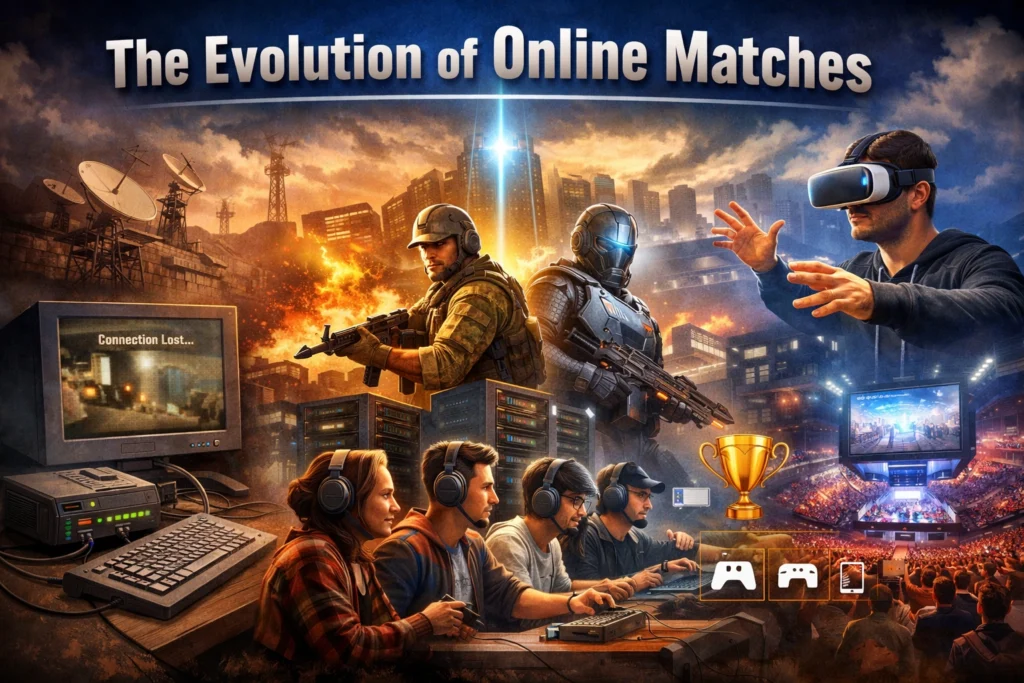
Online matches did not become popular overnight. Their growth followed the development of internet technology and gaming hardware. In the beginning, connection speeds were slow and unstable. Players often faced delays, disconnections, and limited interaction. Matches were small, sometimes allowing only a few participants at a time. Despite these limitations, the excitement of competing against real players was strong enough to keep communities active.
As broadband connections improved, the quality of online gameplay changed dramatically. Faster data transfer reduced lag, making actions feel immediate and responsive. Developers began designing games specifically for online competition instead of simply adding multiplayer as an extra feature. Large maps, detailed environments, and real-time synchronization became standard. Players could now participate in matches that felt smooth and fair.
Another major change came with dedicated servers. Instead of relying on one player’s system to host the match, servers handled connections and game logic. This created stability and allowed larger numbers of participants to join the same session. Massive battles, long tournaments, and global matchmaking became possible. With this improvement, online matches started feeling more professional and organized.
Matchmaking systems also evolved. Earlier, players had to manually find opponents through lobbies or private invitations. Now automated systems analyze performance levels and pair players with others of similar skill. Balanced competition keeps matches interesting and prevents frustration. New players learn gradually, while experienced players face real challenges.
Cross-platform support further expanded online matches. People using different devices can now play together without restrictions. This removed divisions between gaming communities and increased player pools. A single match can include users from multiple regions and hardware types, creating a more connected experience.
Seasonal updates and live service models continue to shape online matches. Developers regularly introduce new maps, characters, and mechanics to keep gameplay fresh. Instead of finishing a game once and moving on, players stay engaged for months or even years. Each update changes strategies and encourages adaptation.
Today, online matches are not just a feature—they are often the main focus of game design. Many modern titles are built entirely around multiplayer interaction. The constant evolution of technology ensures that online matches will keep improving, offering smoother performance, smarter matchmaking, and richer experiences in the future.
Types of Online Matches
Online matches exist in many forms, each offering a different style of competition and engagement. Game developers design multiple formats so players with different preferences can enjoy the experience in their own way. Some players prefer teamwork and coordination, while others enjoy testing their personal skills against opponents. Because of this variety, online gaming never feels repetitive.
One of the most common formats is team-based competition. In these matches, players are divided into groups where cooperation becomes the key to success. Every participant has a role, and victory depends on communication and strategy rather than individual performance alone. Players learn to trust teammates, share responsibilities, and adapt to changing situations. A well-coordinated team can defeat even more skilled opponents simply through better planning.
Another popular type is free-for-all competition. Here, every player fights for themselves, and survival depends entirely on personal ability. Quick reactions, awareness, and smart decision-making matter more than teamwork. These matches often feel intense because threats come from every direction. Players must constantly observe their surroundings and anticipate moves from multiple opponents at once.
Ranked matches add a structured competitive layer. Players earn points or ranks based on their performance, which determines the skill level of future opponents. The higher someone climbs, the tougher the competition becomes. Ranked systems motivate improvement because every match has measurable progress. Winning advances position, while losing encourages learning and adjustment. This creates a cycle of challenge and growth that keeps players engaged.
Casual matches provide a relaxed alternative. Not every player wants pressure or serious competition. Casual modes allow experimentation, practice, and fun without worrying about rankings. Friends often use these matches to play together and enjoy the game without strict expectations. This balance between serious and relaxed gameplay helps maintain long-term interest.
Tournament-style matches bring structured competition similar to real sporting events. Players or teams advance through rounds until a final winner is decided. These matches often generate excitement because every game matters. One mistake can eliminate a participant, making each moment more meaningful. Many communities organize local or online tournaments to test their abilities and build reputation.
Cooperative matches focus on collaboration instead of rivalry. Players work together against computer-controlled challenges, missions, or objectives. Success depends on coordination and shared strategy rather than defeating each other. These modes strengthen teamwork and provide a break from constant competition.
The variety of online match types ensures that gaming appeals to a wide audience. Whether someone seeks intense rivalry, friendly teamwork, or relaxed entertainment, there is always a mode suited to their preference. This diversity is one of the main reasons online gaming continues to grow and remain engaging for players around the world.
The Social Impact of Online Matches
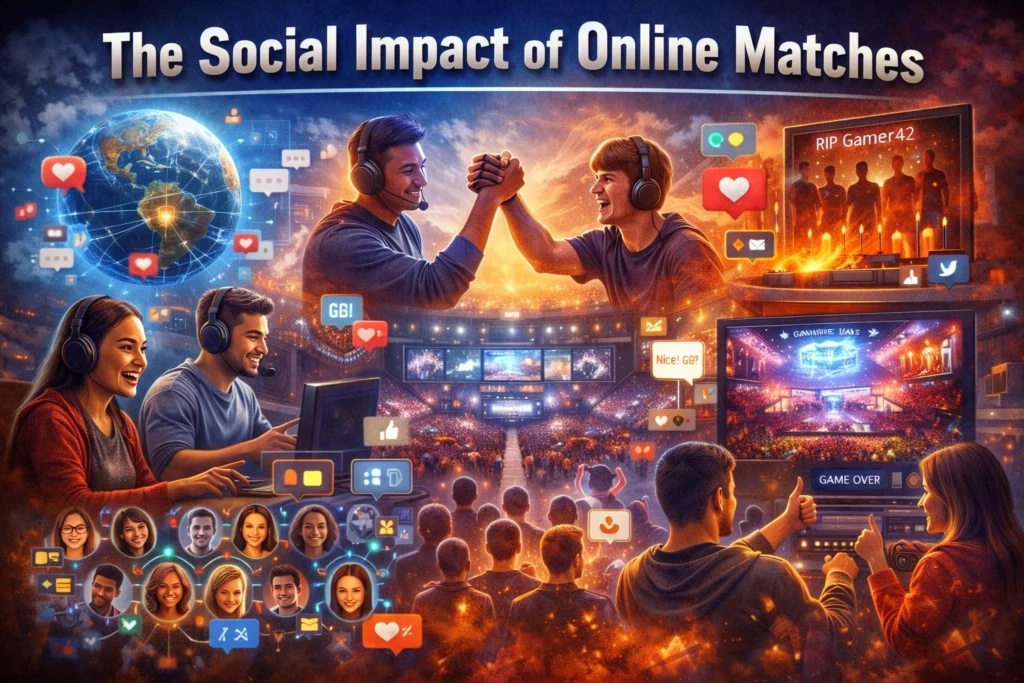
Online matches are not only about gameplay; they have also reshaped how people interact socially. Gaming has evolved from a solitary hobby into a shared experience where players communicate constantly. Through voice chat, text messages, and in-game signals, participants coordinate strategies and react to events together in real time. These interactions create a sense of presence, even when players are separated by thousands of miles.
Friendships often begin during simple matches. Players who cooperate well tend to invite each other again, gradually forming regular groups. Over time, these groups become communities. Members share tips, celebrate victories, and support each other after defeats. Many players log in not just to play, but to spend time with familiar teammates. The match becomes a meeting place rather than just a competition.
Online matches also introduce players to different cultures and perspectives. A single team may include people from different countries, speaking different languages, yet working toward the same objective. Even basic communication teaches patience and understanding. Players learn to adapt their communication style so everyone can participate effectively. This exchange helps create a global social environment centered around shared goals.
Rivalries are another important social element. Competing against the same opponents repeatedly builds recognition and excitement. Players remember skilled competitors and look forward to facing them again. These rivalries remain friendly in most cases and encourage improvement. Knowing an opponent’s style adds depth to future matches and makes victories more satisfying.
Communities formed around online matches often extend beyond the game. Players join discussion groups, share highlights, and discuss strategies outside the gaming platform. Conversations shift from gameplay to daily life, strengthening bonds. Some friendships formed through matches last for years and continue even when players move to different games.
However, social interaction in online matches also requires responsibility. Respectful communication keeps the environment enjoyable. Positive behavior encourages teamwork and learning, while negative behavior can damage cooperation. Many players actively promote sportsmanship, reporting harmful conduct and supporting fair play.
For many individuals, online matches provide a comfortable social space. People who may be shy in person often communicate more confidently through games. Shared objectives make conversations natural, removing awkwardness. As a result, gaming becomes both entertainment and social connection.
In the modern world, online matches function as digital gathering spaces. They combine competition with communication, allowing players to connect through shared challenges and achievements. The social impact of these matches continues to grow, making gaming an important part of everyday interaction for millions of people.
Skill Development Through Online Matches
Many people view online matches purely as entertainment, but they also play a role in developing practical skills. Because players constantly face unpredictable human opponents, they must think quickly and adapt to changing situations. Every match becomes a learning experience where mistakes lead to improvement and success reinforces good decisions.
Reaction time is one of the first abilities players strengthen. Fast-paced matches require immediate responses to visual and audio cues. Players learn to recognize patterns, anticipate movements, and react within fractions of a second. Over time, repeated exposure sharpens reflexes and improves coordination between eyes and hands.
Strategic thinking is equally important. Winning is rarely about speed alone; it depends on planning and awareness. Players analyze the environment, predict opponent behavior, and choose actions carefully. In team matches, individuals must also consider how their choices affect teammates. This encourages long-term thinking instead of impulsive decisions.
Communication skills develop naturally during cooperative gameplay. Teammates share information, warn each other of danger, and plan coordinated actions. Clear and concise communication often determines success. Players learn to deliver important details quickly and understand instructions under pressure. These habits can translate into real-world teamwork situations.
Problem-solving ability also improves. Unexpected situations frequently occur during matches—plans fail, opponents change tactics, or resources become limited. Players must adjust strategies instantly. Instead of repeating the same approach, they experiment with new methods until something works. This flexibility trains the mind to remain calm and analytical under pressure.
Patience and emotional control are another benefit. Not every match ends in victory, and repeated losses can be frustrating. Experienced players learn to review their performance rather than react emotionally. They focus on improvement rather than blame. This mindset encourages resilience and steady progress.
Time management can even be influenced by online competition. Many matches require scheduling with teammates or participation in specific events. Players organize their routines to join sessions on time, balancing responsibilities and recreation. Responsible habits allow them to enjoy gaming without affecting daily life.
Learning through observation is common as well. Players watch skilled competitors and adopt new techniques. By analyzing others, they expand their understanding of mechanics and strategies. Gradually, they build their own playstyle based on experience and knowledge.
Online matches therefore offer more than momentary excitement. They train reflexes, thinking patterns, communication, and discipline. While the primary purpose remains enjoyment, the repeated challenges help players grow mentally and socially. Over time, these improvements become noticeable both inside and outside the game environment.
The Future of Online Matches
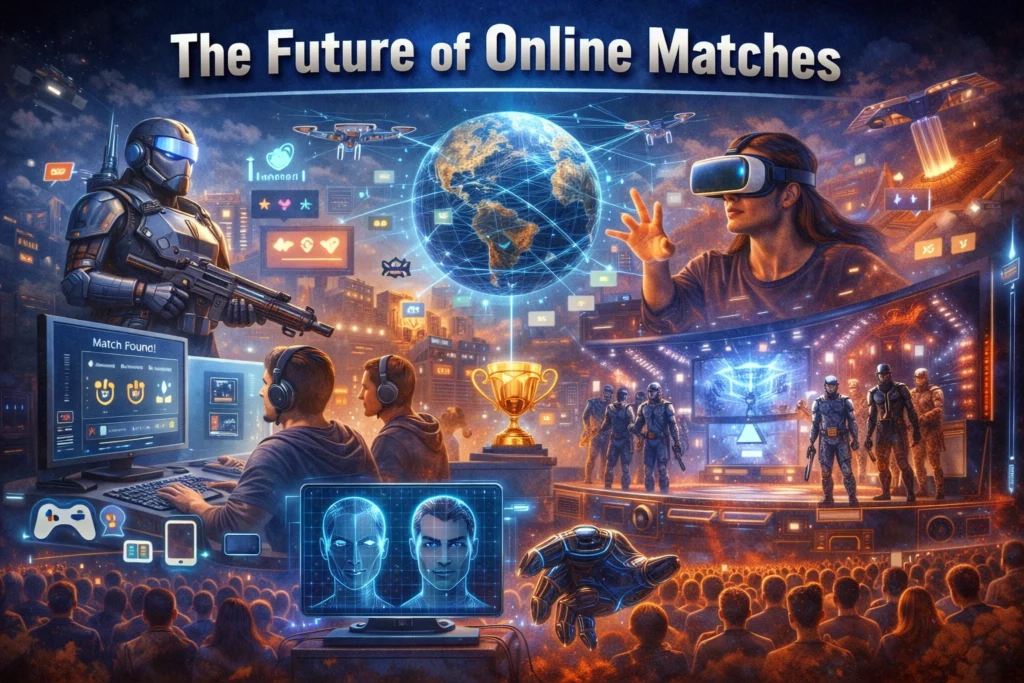
The future of online matches looks increasingly immersive and connected. Technology continues to advance, and each improvement changes how players experience competition. Faster internet speeds, improved servers, and smarter systems are already reducing delays and making gameplay smoother. In the coming years, matches will feel even more responsive, almost as if every participant is in the same physical space.
Virtual reality is expected to play a major role. Instead of watching the action through a screen, players will step directly into digital arenas. Movements, gestures, and positioning will become part of gameplay. Communication may feel more natural as avatars mirror real body language. This shift could make teamwork and competition more intense and personal than ever before.
Artificial intelligence will also enhance online matches. Advanced systems can study player behavior to create fairer matchmaking. Rather than simply comparing win rates, future systems may understand playstyles and preferences. Balanced matches will reduce frustration and increase enjoyment for beginners and experienced players alike. AI may also assist in moderating behavior, identifying harmful communication, and encouraging positive interaction.
Cloud gaming will expand accessibility. Players will no longer need powerful hardware to join high-quality matches. Games will run on remote servers while devices simply display the results. This allows people with basic computers or mobile devices to participate in complex multiplayer environments. As accessibility increases, communities will grow larger and more diverse.
Persistent online worlds are another likely development. Instead of separate sessions, matches may exist within continuous environments that evolve over time. Player actions could affect the world permanently, changing maps, objectives, or available resources. This would make each match part of a larger ongoing story rather than an isolated event.
Competitive gaming will continue to expand professionally. Organized tournaments may become more structured, with clearer career paths for skilled players. Spectatorship will also evolve, offering interactive viewing where audiences influence perspectives, statistics, or camera angles. Watching matches may feel almost as engaging as playing them.
Security and fairness will remain priorities. Developers will continue improving systems that detect cheating and protect accounts. Reliable competition builds trust, and trust keeps communities active. As technology grows, maintaining integrity will be essential for long-term success.
Ultimately, online matches will move closer to blending digital and real experiences. The boundary between physical presence and virtual interaction will continue to shrink. Players will not just control characters—they will feel present inside the competition itself. This progression ensures that online matches will remain a central part of gaming culture, constantly evolving while preserving the excitement that makes players return again and again.
Conclusion
Online matches have become the defining feature of modern gaming, shaping how players experience competition and connection. What once began as simple multiplayer sessions has grown into a vast digital environment where millions of people interact daily. Every match offers a unique situation because real players bring creativity, unpredictability, and emotion into the experience.
The appeal of online matches lies in their balance between challenge and enjoyment. Players test their abilities, refine strategies, and learn from both victories and defeats. Some participate casually for relaxation, while others pursue mastery and recognition. Regardless of skill level, the shared objective of playing together creates a sense of involvement that single-player experiences cannot fully replicate.
Beyond gameplay, online matches foster communication and relationships. Teammates coordinate actions, opponents build rivalries, and communities grow around shared interests. These interactions turn gaming into more than entertainment—it becomes a social activity that connects people across distances. Platforms such as casinoidworld highlight how competitive environments continue to expand across the online space, while communities built around mahadeviplid show how players gather, interact, and stay engaged over time.
Technological progress continues to expand what online matches can offer. Improved performance, smarter matchmaking, and new interactive systems promise even deeper engagement in the future. Yet the core reason players return remains simple: the excitement of facing real opponents and the satisfaction of overcoming challenges together.
In the end, online matches represent a constantly evolving form of digital interaction. They combine competition, cooperation, and communication into a single experience. As gaming moves forward, online matches will continue to grow, bringing players together in dynamic environments where every game tells a different story and every session creates a new memory.
FAQ – Online Matches in Gaming
1. What is an online match in gaming?
An online match is a multiplayer game session where players connect through the internet and compete or cooperate in real time instead of playing against computer-controlled opponents.
2. Do I need a fast internet connection for online matches?
A stable internet connection is more important than extreme speed. Consistency prevents lag, delays, and disconnections, which helps maintain smooth gameplay.
3. Are online matches only for professional gamers?
No. Online matches are designed for everyone. Casual players, beginners, and experienced players all participate, usually matched with others of similar skill levels.
4. What is matchmaking in online games?
Matchmaking is a system that pairs players with opponents or teammates based on performance, rank, or experience to create balanced and fair matches.
5. Can I play online matches with friends?
Yes. Most games allow private lobbies, invitations, or team creation so you can play together instead of being matched with random players.
6. Why do players improve faster in online matches?
Human opponents behave unpredictably, forcing players to adapt and learn new strategies continuously, which accelerates skill development.
7. Are online matches safe for younger players?
They can be safe if parental controls, chat filters, and privacy settings are used. Supervision and time limits also help maintain a positive experience.
8. What should I do if I face toxic behavior in a match?
Use the in-game report or mute options. Most games include moderation systems designed to handle negative behavior and protect players.
9. Do online matches require powerful gaming devices?
Not always. Many games run on average devices, and cloud gaming is making high-quality matches accessible without expensive hardware.
10. What makes online matches different from offline multiplayer?
Offline multiplayer requires players to be in the same location, while online matches connect players worldwide, offering larger communities and endless competition.